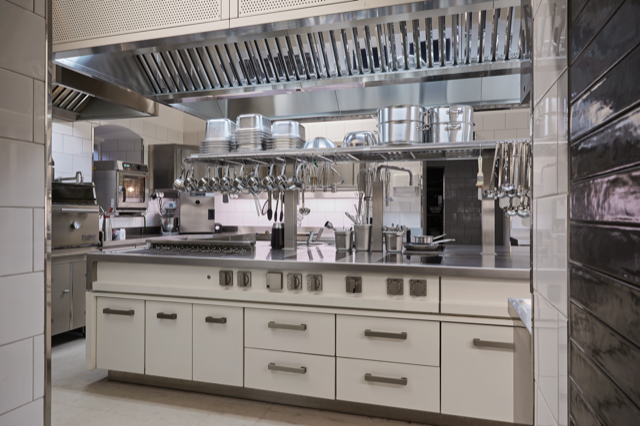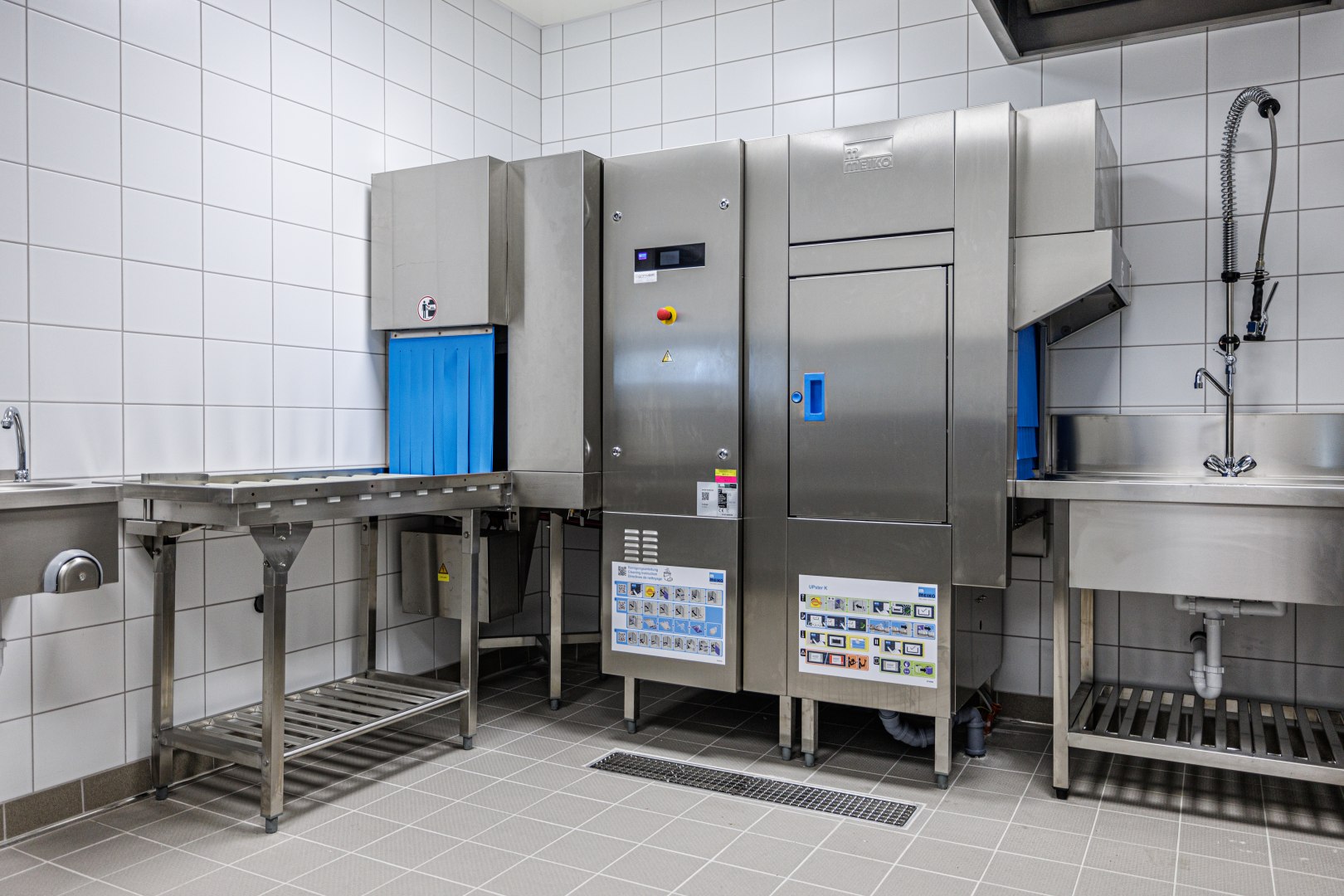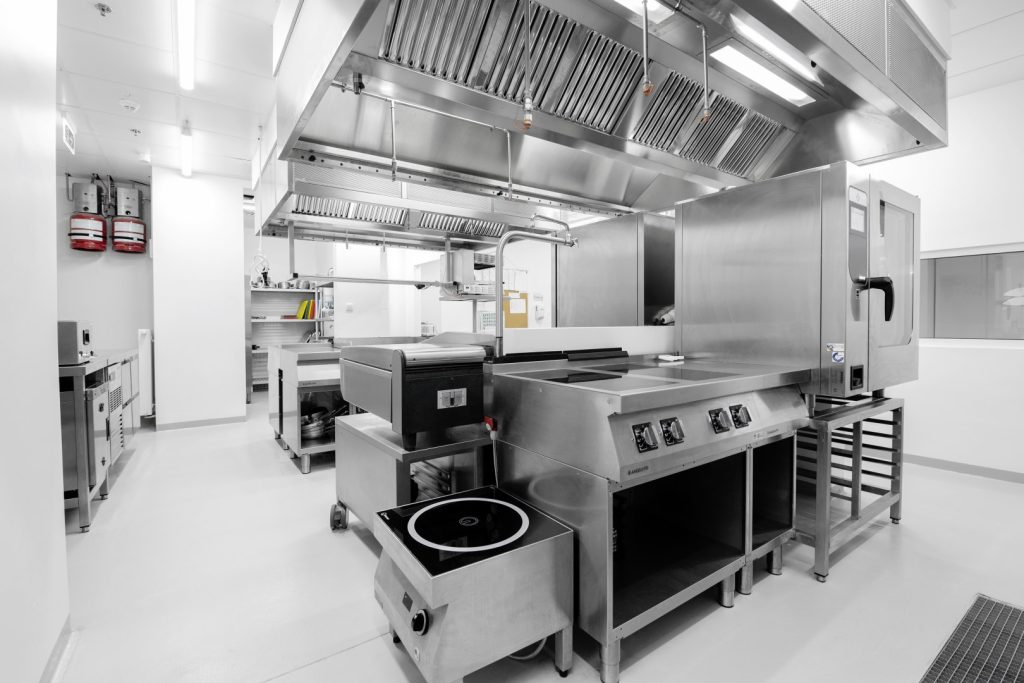
How can we design a kitchen to avoid these problems?

Ákos Rácz, Coninvest’s technical and commercial director, draws on his experience of hundreds of kitchens in operation to show where the biggest – often invisible – losses occur.
A professional kitchen works well if it is not only suitable for cooking, but can also be operated economically, predictably, and over the long term. In practice, however, we see that in most kitchens, it is not the raw materials that are the biggest cost factor, but invisible losses.
These do not stem from a single bad decision, but from many small compromises that were left in the system during planning or implementation on the basis of “we’ll fix it later.” In a well-designed kitchen, however, these losses can be filtered out at the first stage.
1. Heat loss: when the kitchen heats itself
Unnecessary heat generation is one of the biggest, yet least recognized operational losses. Traditional cooking appliances—especially gas—heat not only the food, but also the entire kitchen space. A traditional open-flame gas stove has an efficiency of ~45%, while an induction hob has an efficiency of well over 75%. The waste heat of a four-zone, 20 kW MKN induction stove is 560/1,400 W, while for a 19.6 kW four-burner stove, these values are 1,960/4,900 W, according to VDI 2052.
This has multiple consequences:
- energy consumption increases,
- the working environment deteriorates,
- and more powerful ventilation and cooling are required.
The solution is not simply a change of technology, but heat-conscious design. Selecting equipment that only generates heat where and when it is really needed, and taking the heat load into account when dimensioning the extraction and ventilation systems.
2. Extraction loss: when we move too much air
Extraction is often “over-engineered” in many kitchens. Powerful motors, high air flow, continuous operation — even though the cooking load does not always justify this.
The problem here is not the size of the extractor fan. What is missing is intelligent control. The air that is unnecessarily extracted must be replaced, heated or cooled, which generates further energy consumption.
In modern kitchens, extractor fans are:
- load-dependent,
- divided into zones,
- uses higher efficiency filters,
- increases efficiency with an auxiliary air jet,
- helps keep the entire ventilation system cleaner with a UV grease removal system,
- and works in tandem with the cooking technology.
This not only saves energy, but also improves operational stability.
3. Poor kitchen flow: when unnecessary movement results in loss
A kitchen can be expensive and modern, but if the flow is poor, it will still be unprofitable. Unnecessary movement takes time, energy, and concentration—and it’s invisible.
Typical mistakes:
- cross-cutting work processes,
- excessively long material and container routes,
- poorly placed storage and preparation areas.
Good flow is not a question of aesthetics, but of operational logic. When designing, we think in terms of workdays rather than floor plans: who, when, what, where, and where to move. If this is well planned, most of the losses will be eliminated from the outset.
4. Inappropriate choice of equipment: when the kitchen is not designed for the actual load
Many kitchens are either oversized or unable to cope with peak periods. Both cause losses. Oversized equipment consumes energy unnecessarily, while undersized equipment becomes overloaded, depreciates more quickly, and leads to temporary solutions.
Good planning here is data-driven:
- actual number of servings,
- peak load,
- operating time,
- food selection,
- number of staff.
We select equipment based on operating scenarios, not catalogs.
5. Maintenance and cleaning losses: when the system is not self-sustaining
A kitchen becomes truly expensive when it requires a lot of time and energy to maintain. Surfaces that are difficult to clean, appliances that are difficult to access, frequent breakdowns—all of these slow down operations.
During the design phase, maintenance is not an “afterthought” but a systemic consideration:
- easy-to-clean surfaces,
- logical access points,
- reliable technology.
This means less downtime, less stress, and more predictable operation.
Loss is not fate, but a matter of planning
Most operational losses do not occur in the kitchen, but on the drawing board. A well-thought-out kitchen technology concept is not only attractive and modern, but also meets the requirements laid down in the relevant regulations and consciously eliminates unnecessary costs from the system.
We believe that a good kitchen is not one that is spectacular, but one that works well in the long term without being noticed. When heat, air, people, and technology all work in the same direction, operation is not a struggle, but a system.