How the interior design of the Dunapark Café was realized with Coninvest
The Dunapark House, located at the intersection of Pozsonyi Road and St. Stephen’s Park, was designed by Béla Hofstätter and Ferenc Domány and built between 1935 and 1937; the ground-floor café opened its doors in 1937–1938. This modern, functionalist luxury apartment building offered the most advanced features of its era—including elevators, a concierge service, and a rooftop garden—while its architectural character is defined by subtle Art Deco and Bauhaus elements alongside modernism. Since then, Dunapark has been one of Újlipótváros’s best-known meeting places, and in the summer of 2026, it underwent a complete renovation: the Eventrend Group took over operations, and the café was revitalized over the course of the summer while preserving its historical values.
Furnishing a space of this scale, with a history spanning nine decades, is not simply a matter of purchasing furniture. Coninvest participated in this project as a furniture supplier and expert partner, supporting the interior design concept developed by WAFT Studio.
“For Coninvest, the Dunapark Café is not simply another project, but the rebirth of one of the most important, 90-year-old icons of Budapest’s café culture,”
says Gabriella Bakos-Tóth, head of Coninvest’s furniture division.
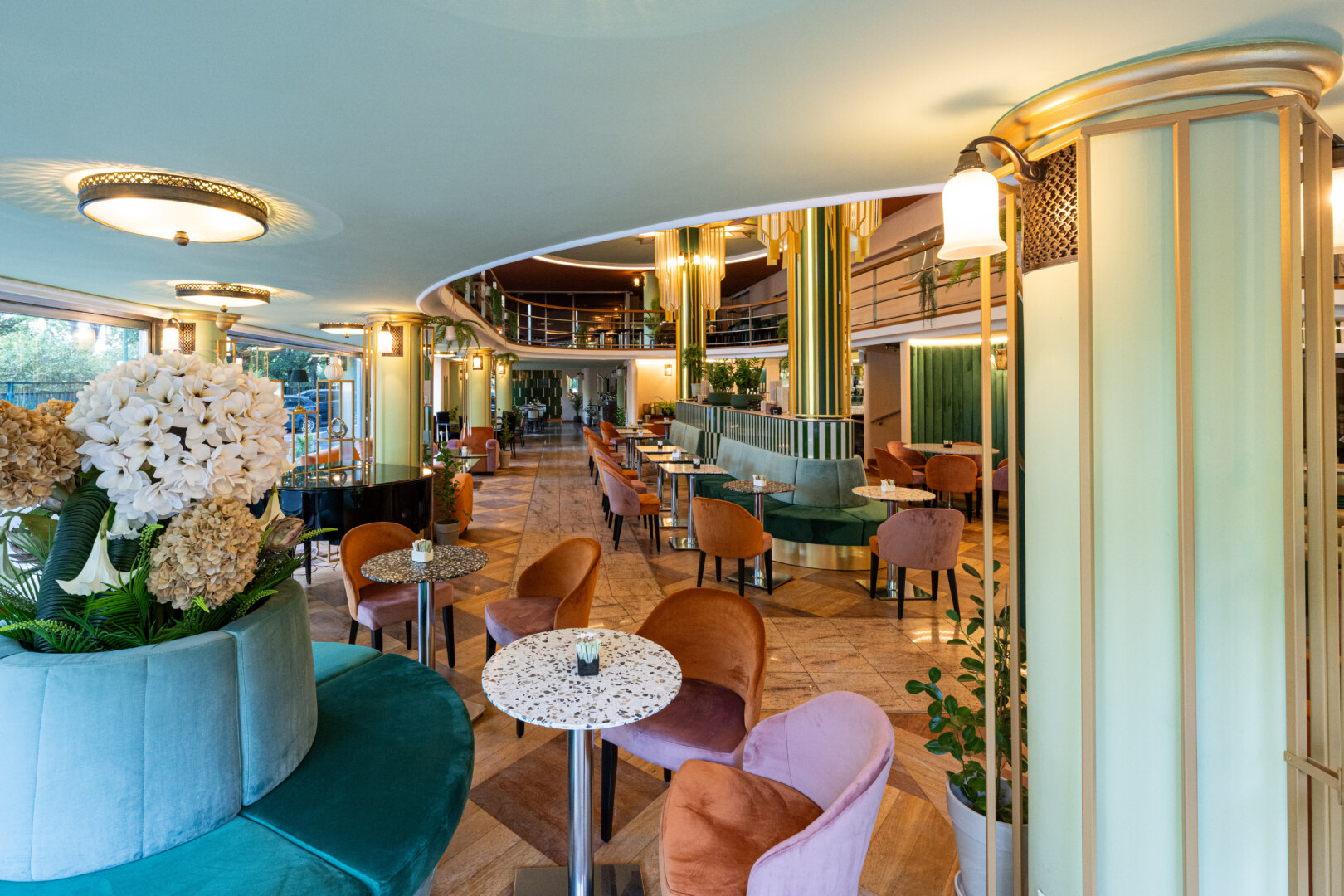
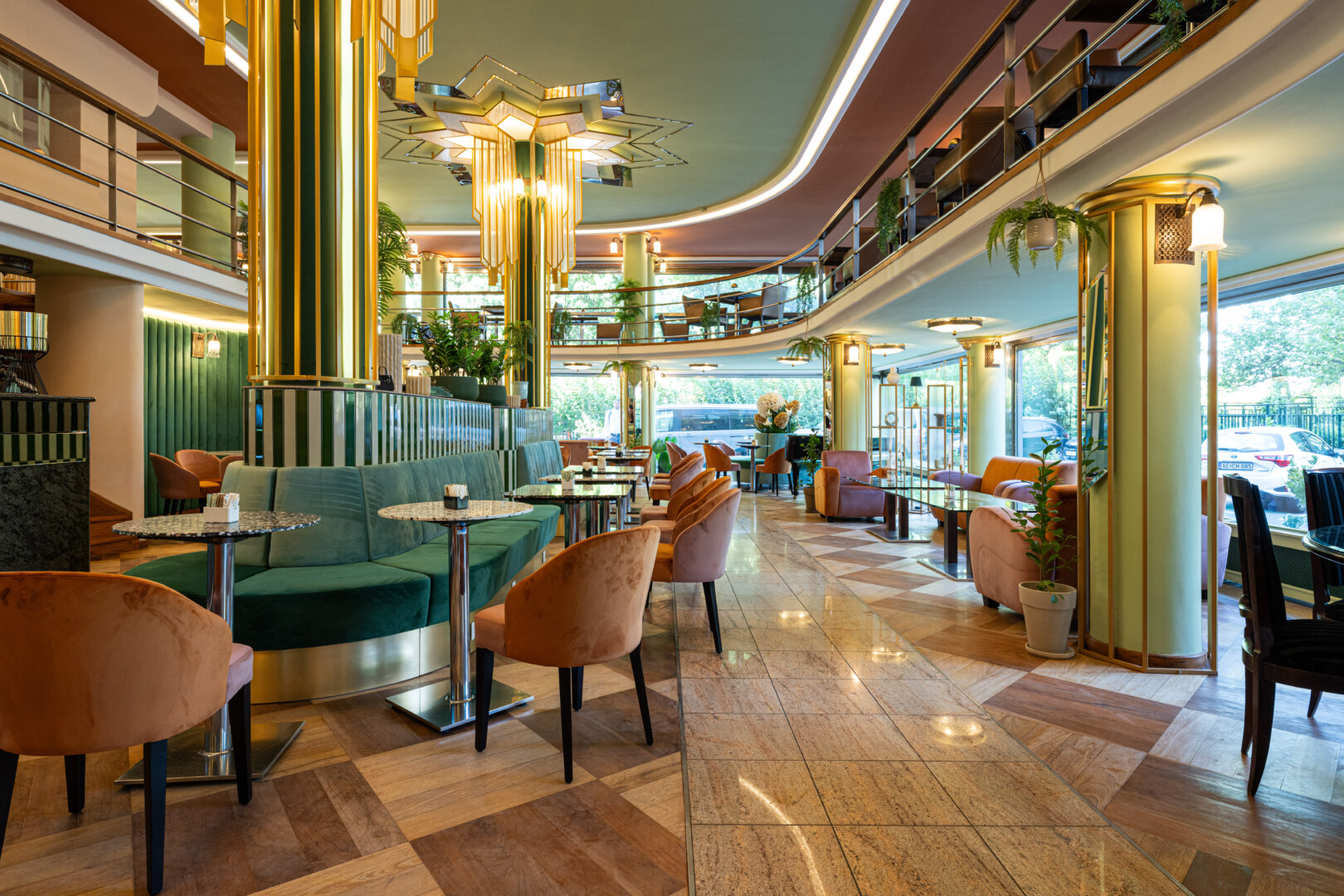
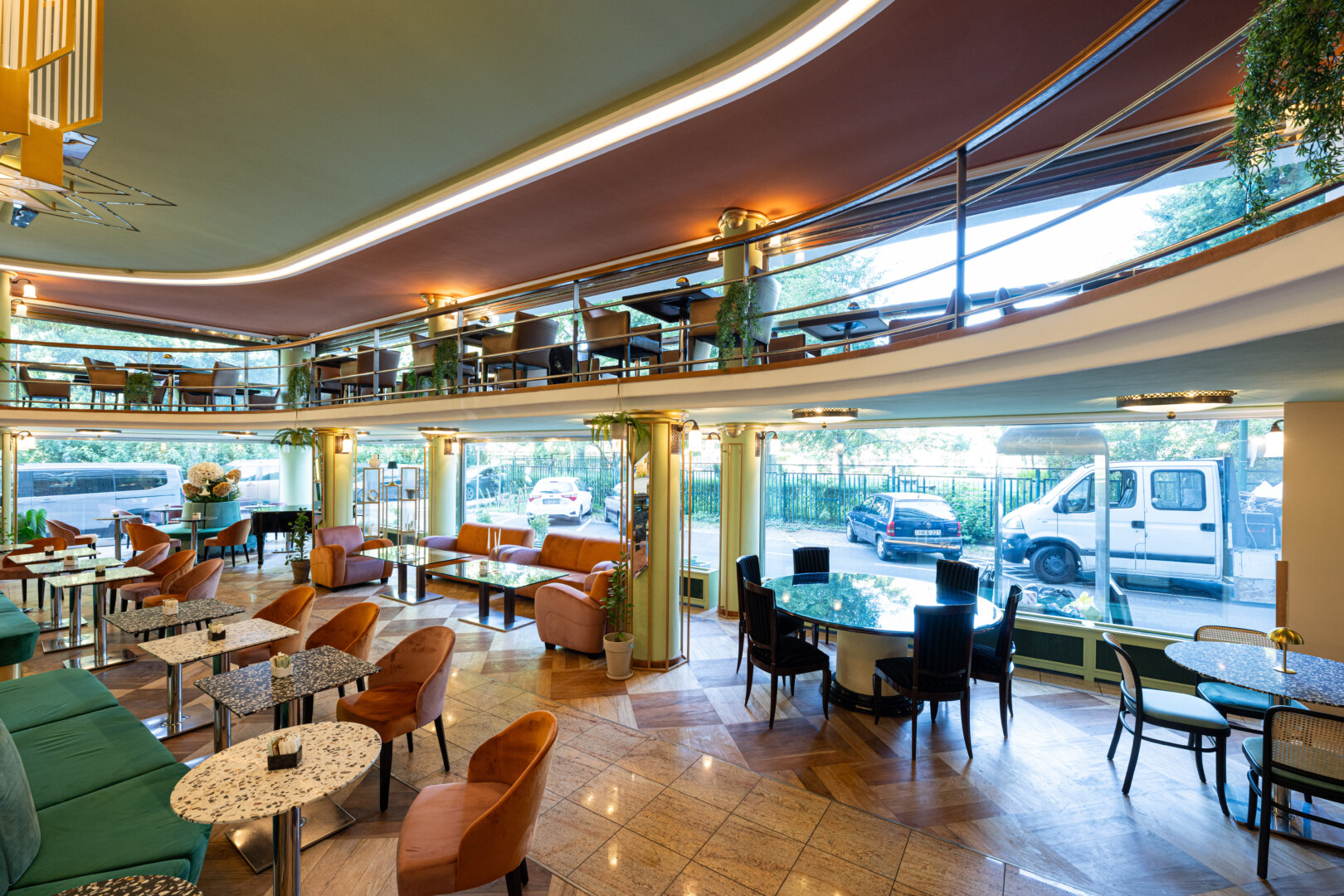
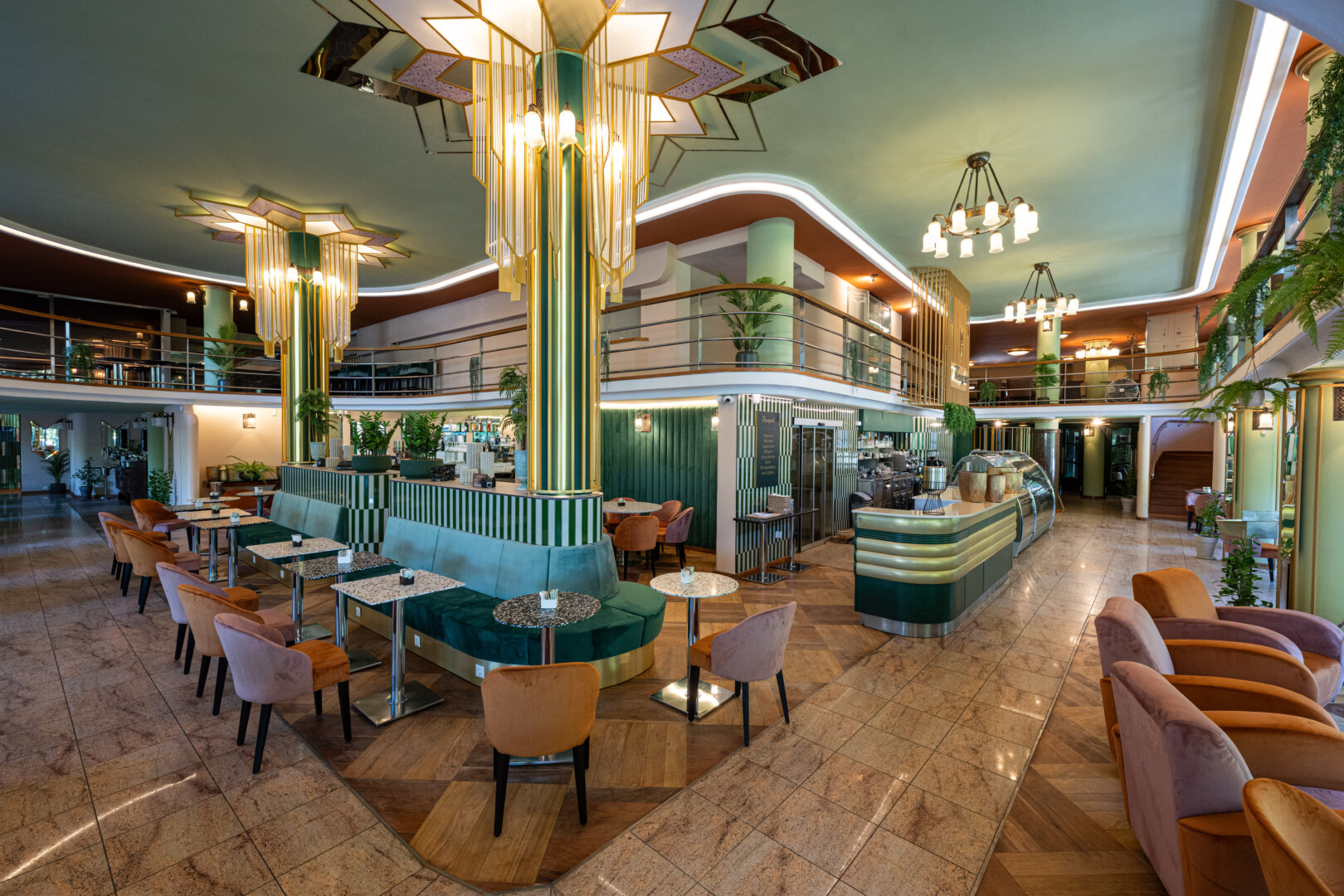
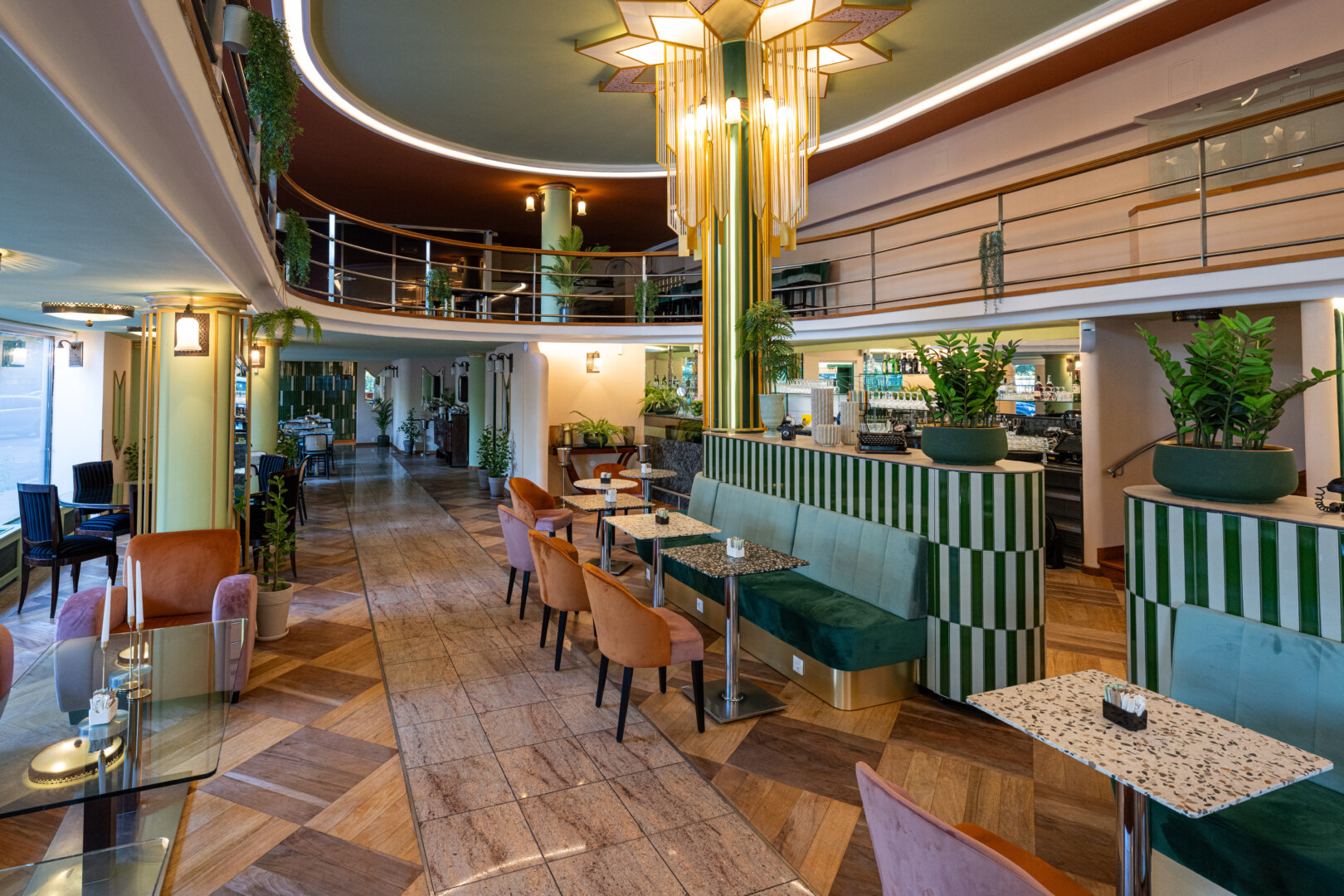
Not a museum, but a living space
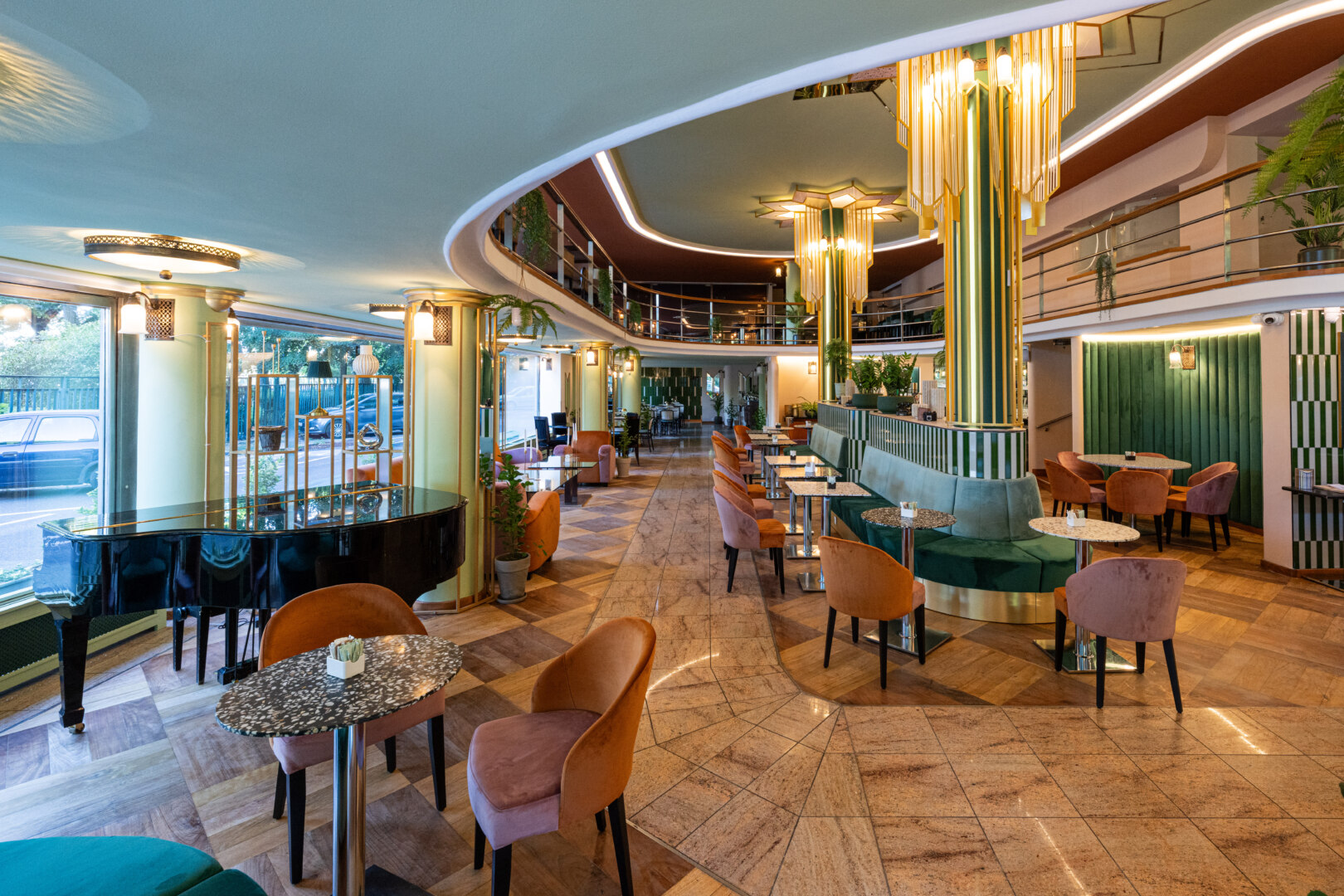
The guiding principle behind the selection of furniture was a strict balance: the goal was not to preserve a historic interior, but to create a vibrant gathering place in Újlipótváros. We had to find pieces whose forms embodied the original Art Deco geometry and elegance, yet whose construction and materials met today’s hospitality industry standards. The concept was developed by WAFT Studio, and Coninvest’s role was to bring this vision to life through close collaboration, acting as both a furniture supplier and an expert.
Materials that don’t give themselves away
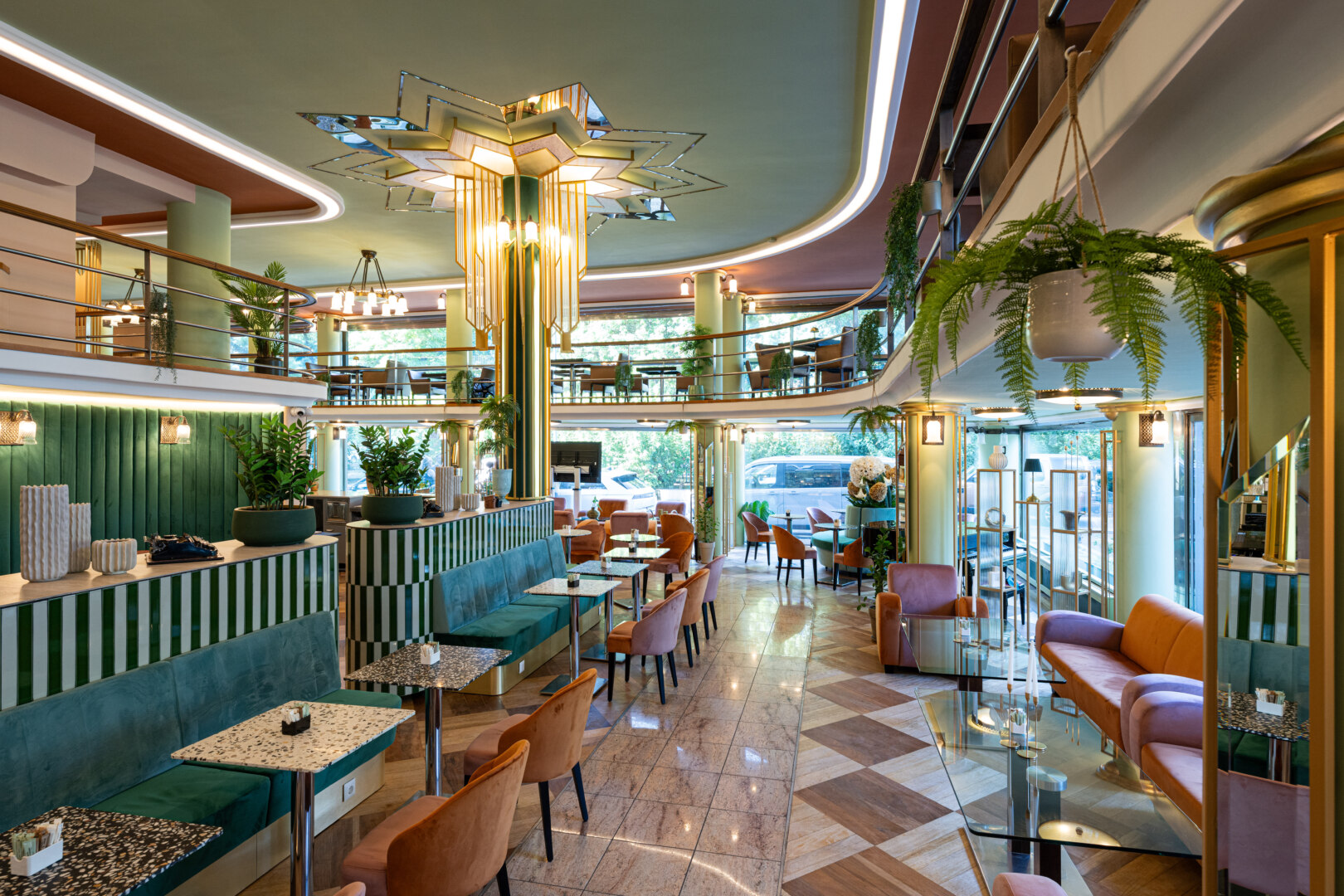
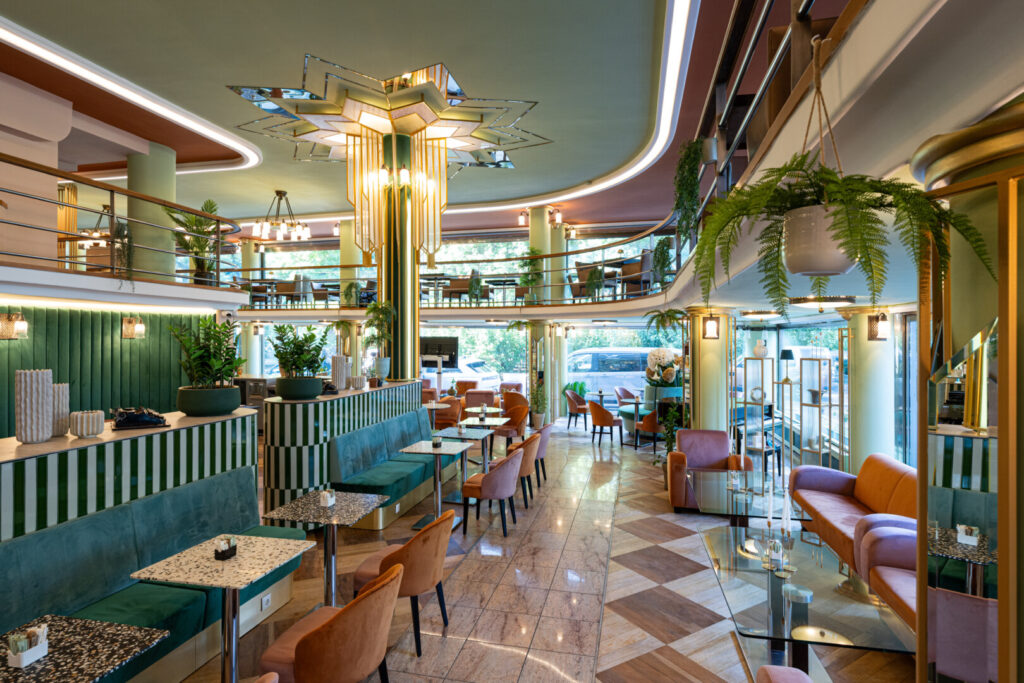
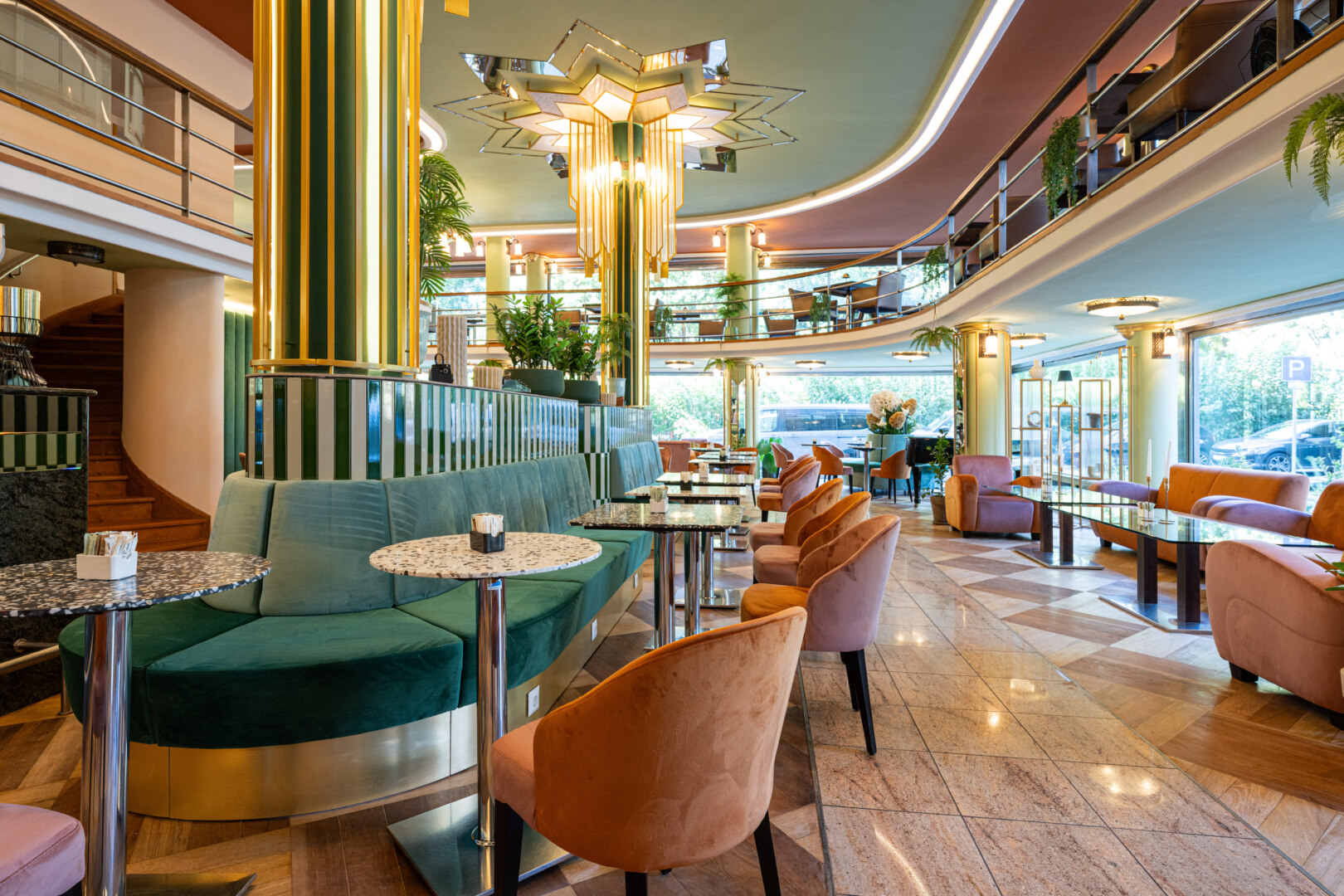
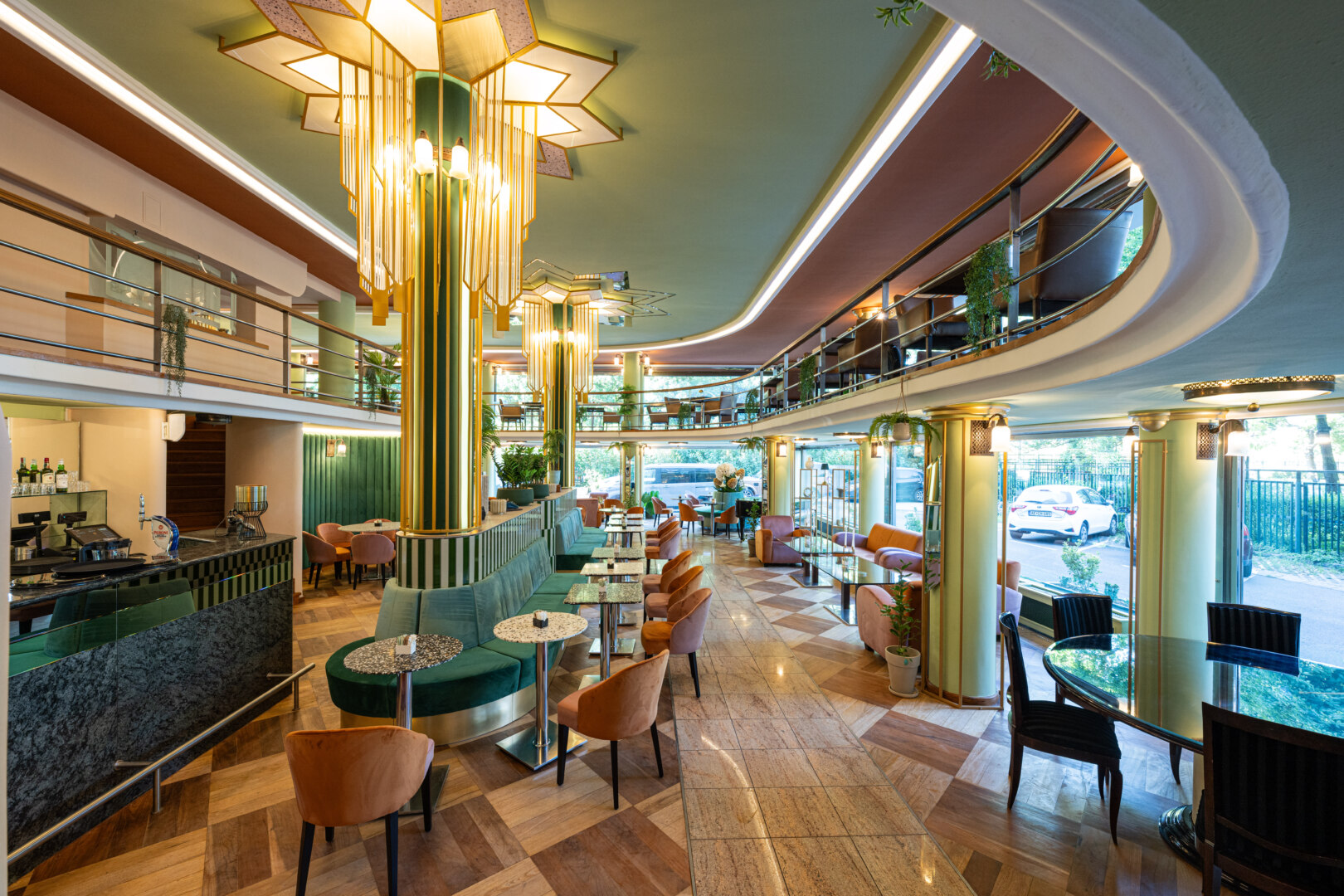
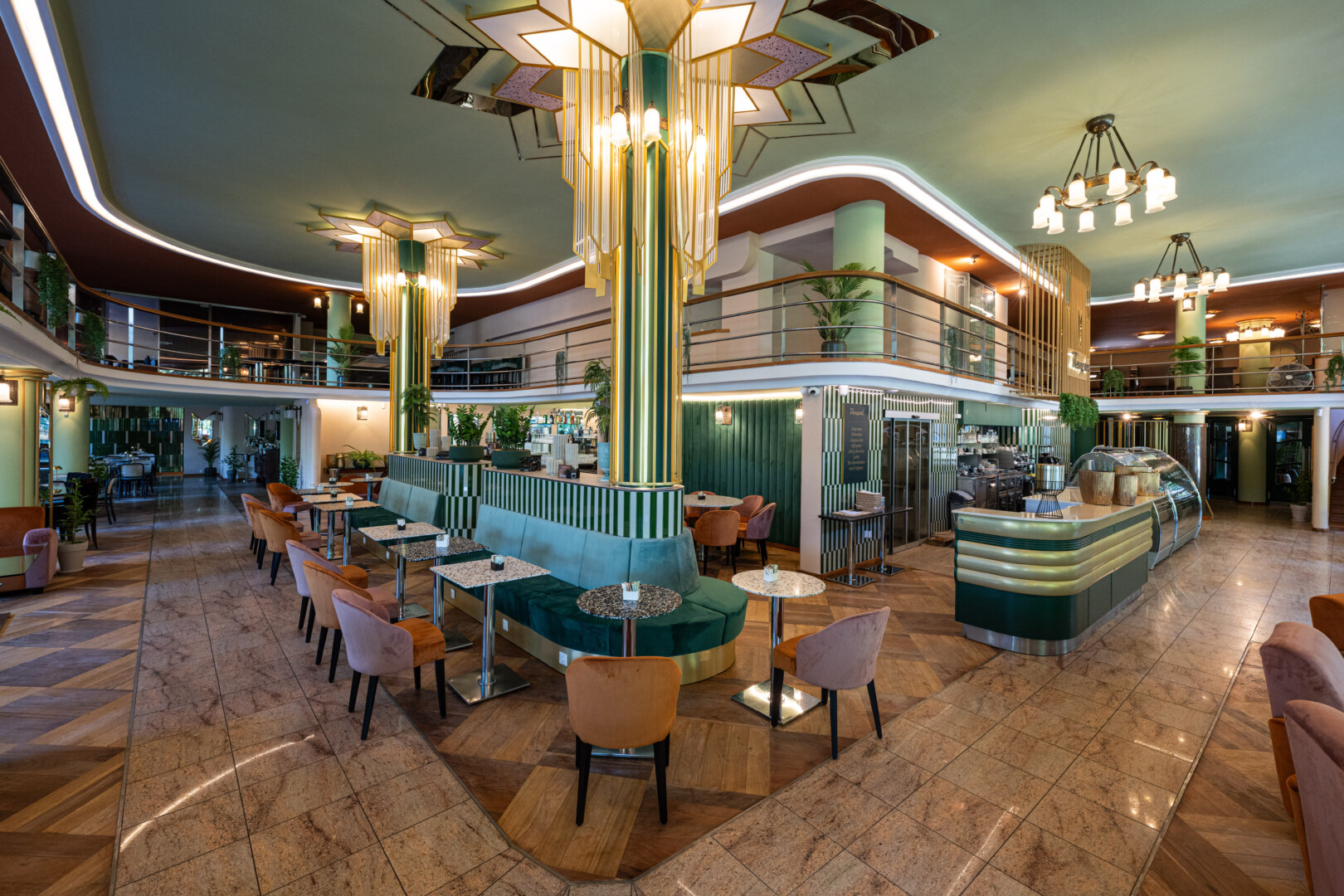
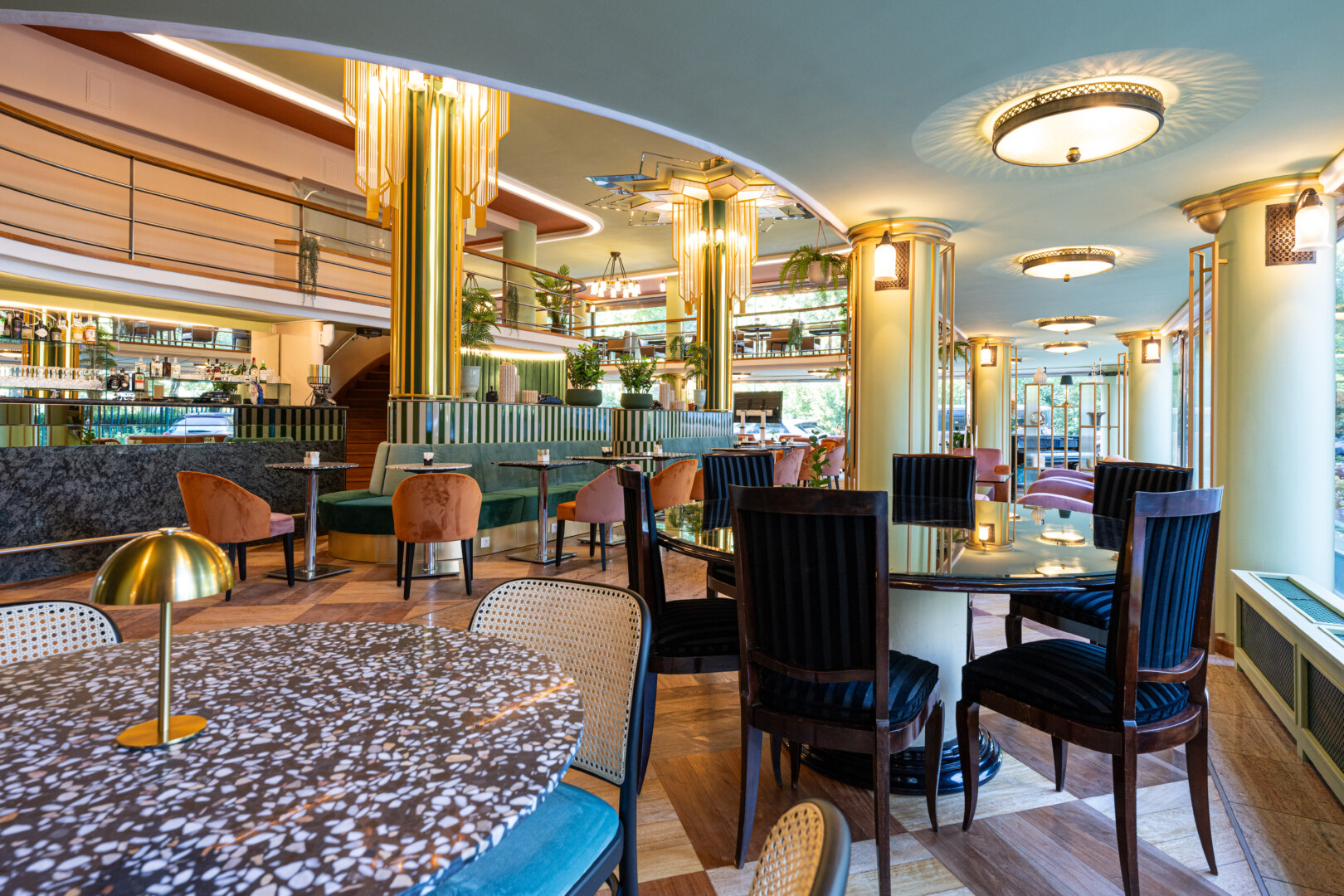
The secret to seamless integration lies in the deliberate harmonization of textures, forms, and materials. When the silhouettes of the furniture echo the Art Deco arches of the building, and the materials—genuine marble, fine upholstery—evoke the quality of classic Pest cafés, the end result does not appear as a foreign element but as an integral part of the space.
“The new furniture thus does not appear as a foreign element, but rather as if it had always been an integral part of the space, only now having attained its most beautiful, freshest form,” says Gabriella Bakos-Tóth.
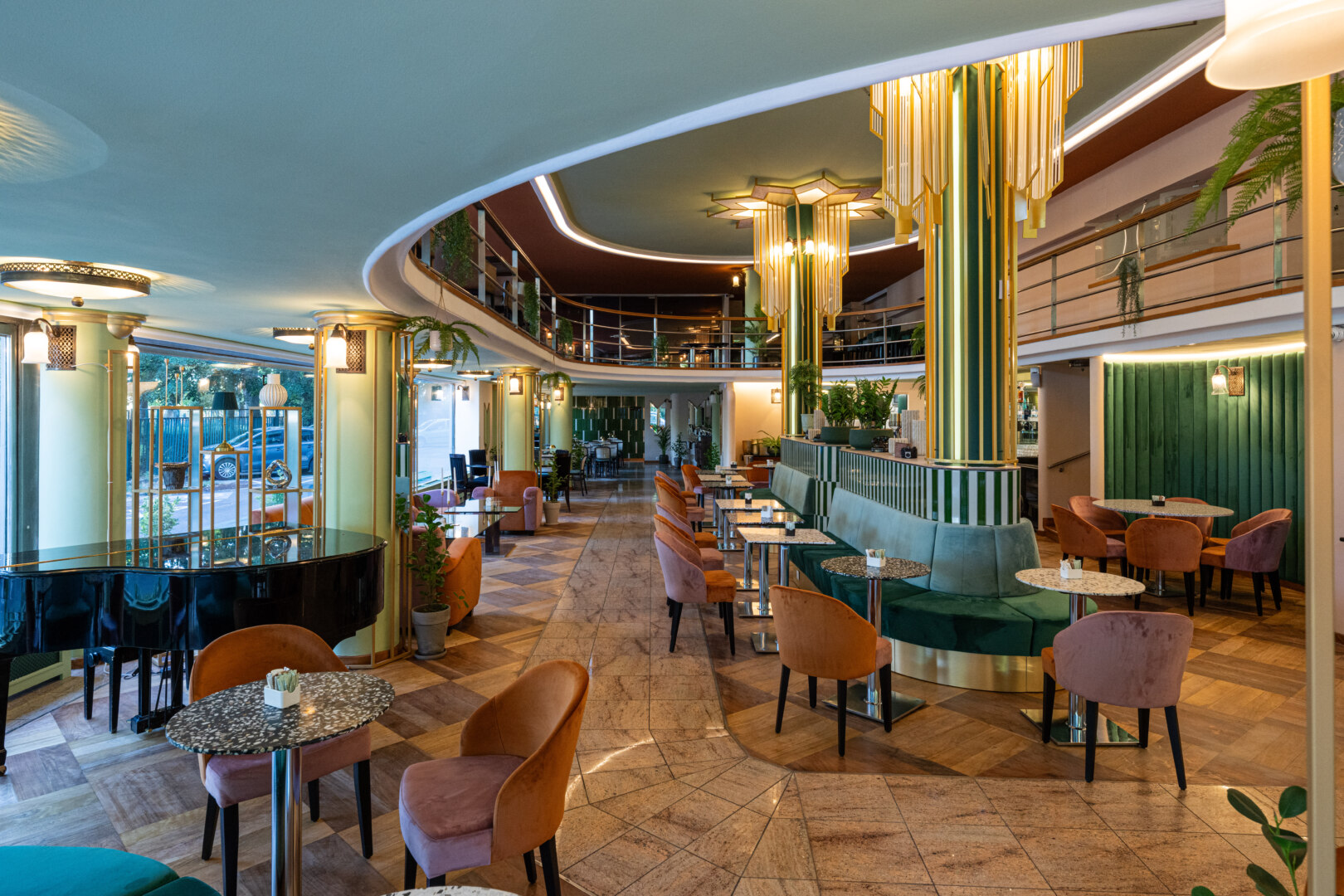
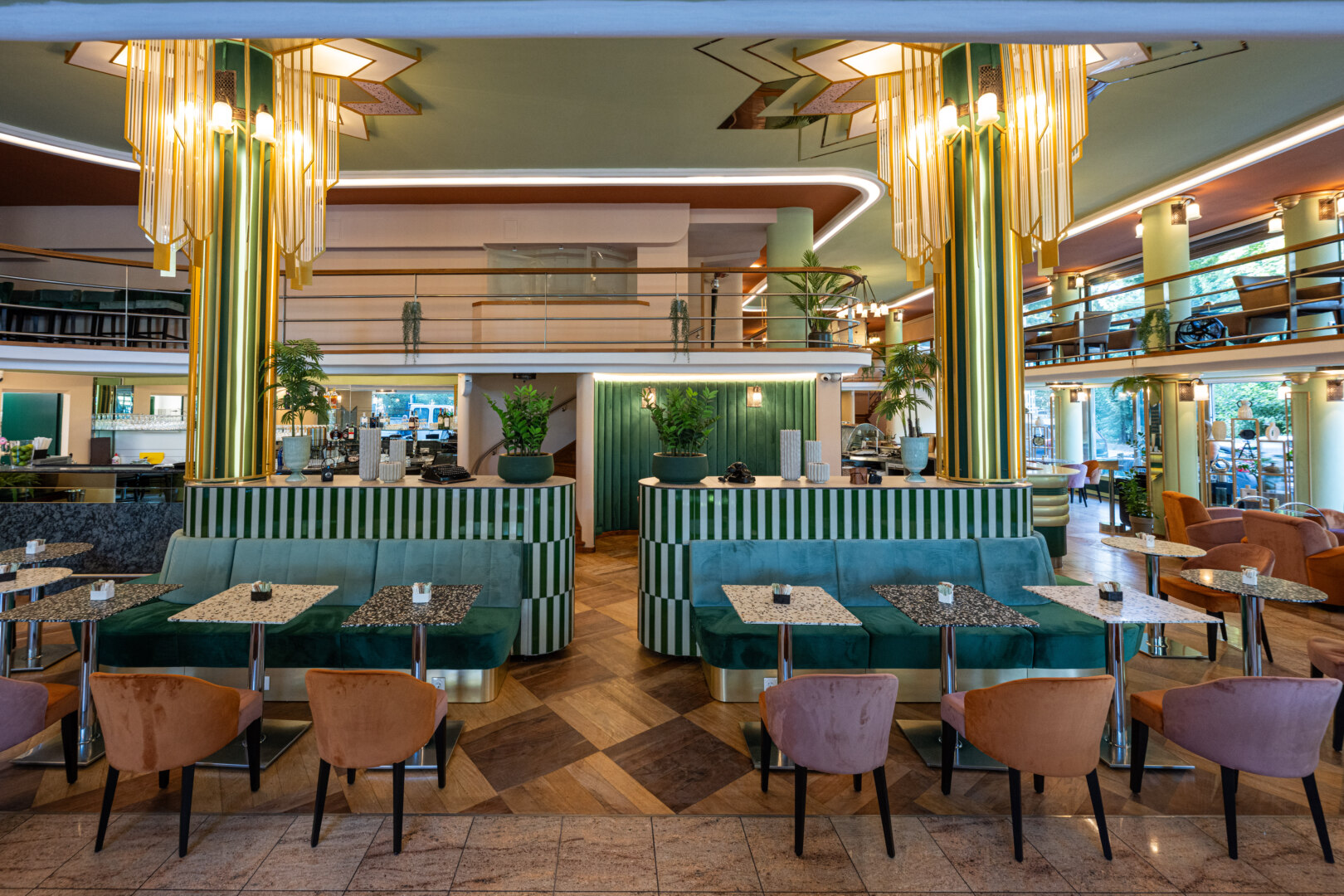
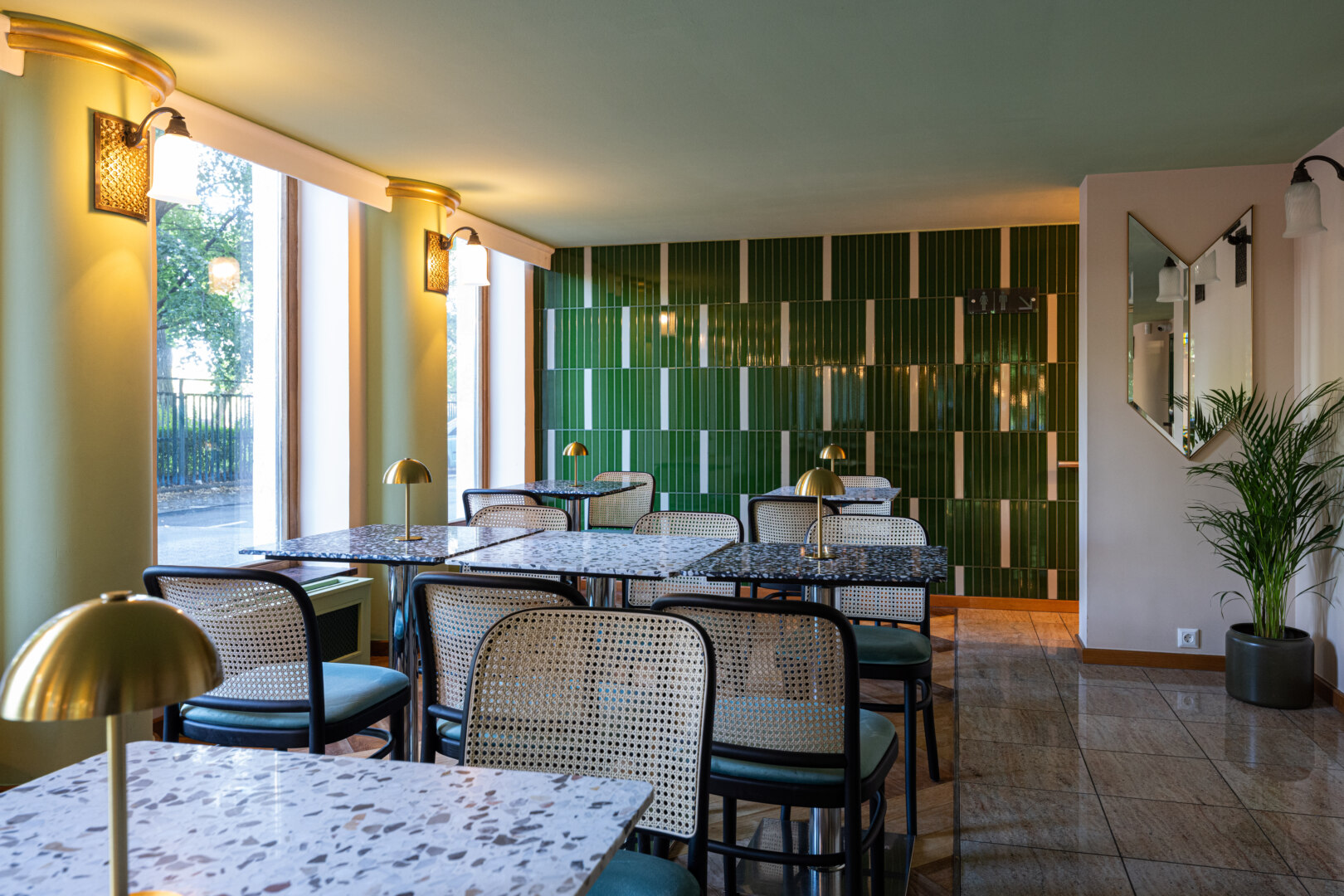
What the eye doesn’t see, daily guest numbers tell
Dunapark is open continuously from morning until night: it serves as a brunch venue, a hub for business lunches, and an elegant setting for evening dinners all at once. This level of use places serious professional demands on the furniture. The selected fabrics have an exceptionally high Martindale rating, meaning they are abrasion-resistant, stain-resistant, and easy-to-clean commercial-grade materials, while the construction of the tables and chairs meets even the most stringent hospitality industry load-bearing tests. Ergonomics was no afterthought either: guests come to Dunapark not to rush through their visit but to linger, which is why the carefully selected Iconchairs seating and upholstered chairs provide optimal spinal support, while the cushioning prevents fatigue—all while maintaining an airy, Art Deco elegance with their shell-shaped design.
Custom manufacturing, tailored details
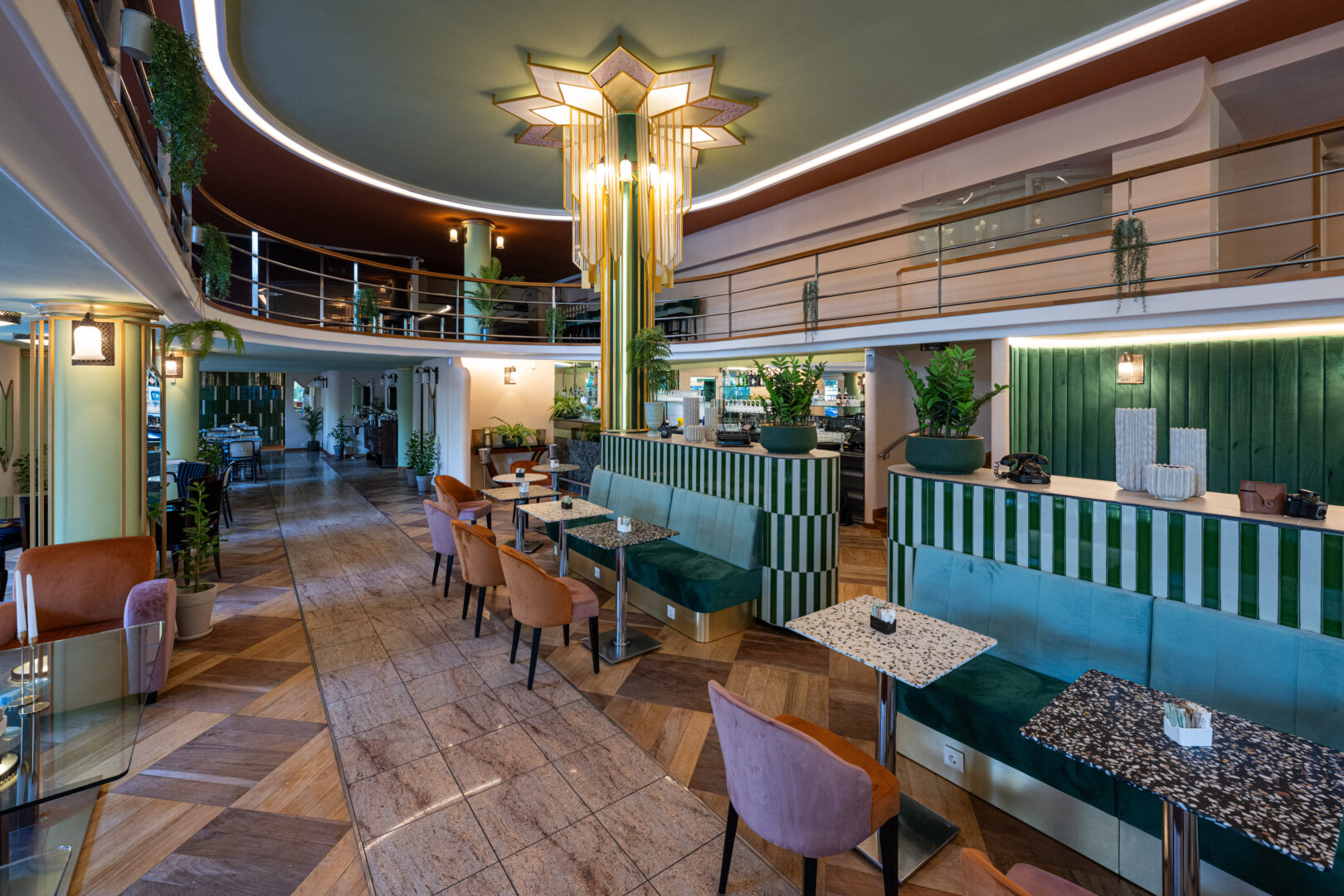
For the frame structures, they relied on top-of-the-line models from renowned manufacturers such as Pedrali, while the upholstery and the final finish of the fixed tabletops were fully tailored to the project’s unique color and material scheme. As a result, the final product cannot be found anywhere else in exactly this form. The process required daily, synergistic teamwork between the interior designers and the contractors: constant coordination regarding colors, patterns, exact dimensions, and connection points ensured that the table layout perfectly accommodates both foot traffic and the rhythm of work at the café.
A youthful twist in an Art Deco space
In a historic Art Deco space, the clean-lined, new marble and Pedrali tabletops have added a fresh, youthful twist—a visual interplay in which guests perceive only the space’s style and warmth, while behind the scenes lies serious interior design work.
“Guests simply feel that the venue is incredibly stylish and welcoming, but behind it lies serious interior design work that seamlessly, effortlessly, and stably bridges the classic and modern worlds,” adds Gabriella Bakos-Tóth.
Timelessness rather than rigidity
Timelessness rests on two pillars: physical durability—premium materials, solid wood, high-quality marble—and aesthetic longevity, meaning that the furniture follows clean, timeless proportions that remain relevant even decades later, rather than fleeting trends. The Dunapark project demonstrated that a 90-year-old Art Deco legacy and the elegance of upholstered chairs do not imply rigidity.
Thanks to the bold, modern tabletops, the end result is a youthful, contemporary, and vibrant urban space.