How many generations can a successful family business remain in the hands of the founding family? And what happens when a third-generation member of that family both preserves the legacy of the past and builds an entirely new entrepreneurial chapter?
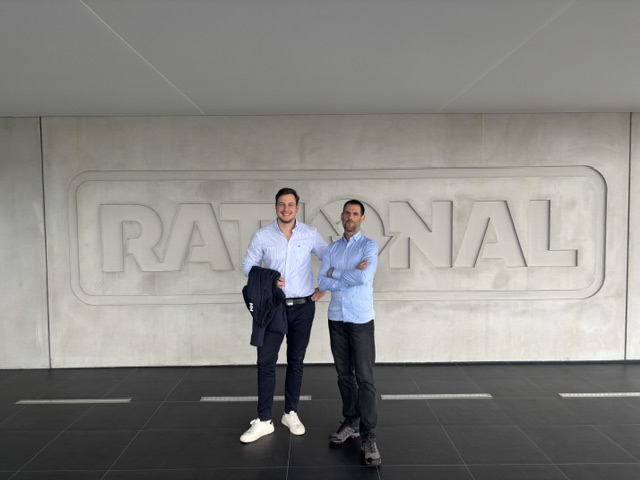
These were some of the questions on my mind when I visited Rational Production this summer, a manufacturing company located near Bergamo. The company has been developing and producing high-quality food distribution systems for around 25 years, primarily for hospitals, nursing homes, schools and corporate catering facilities.
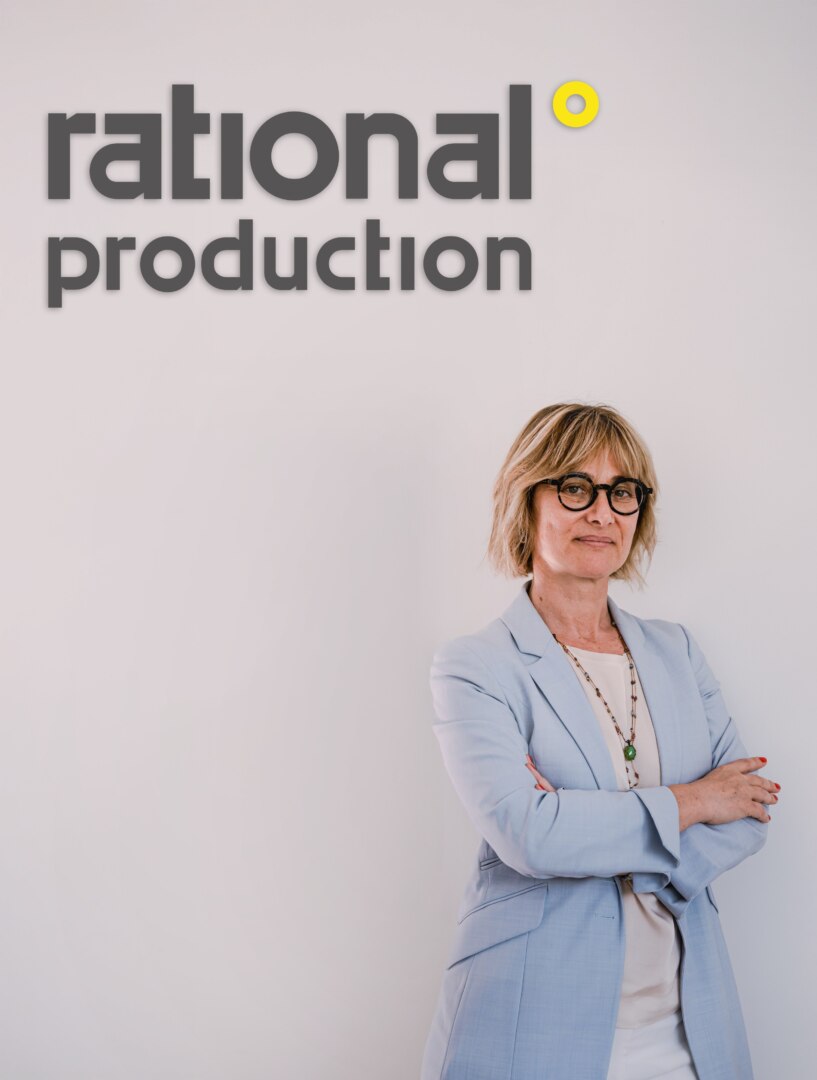
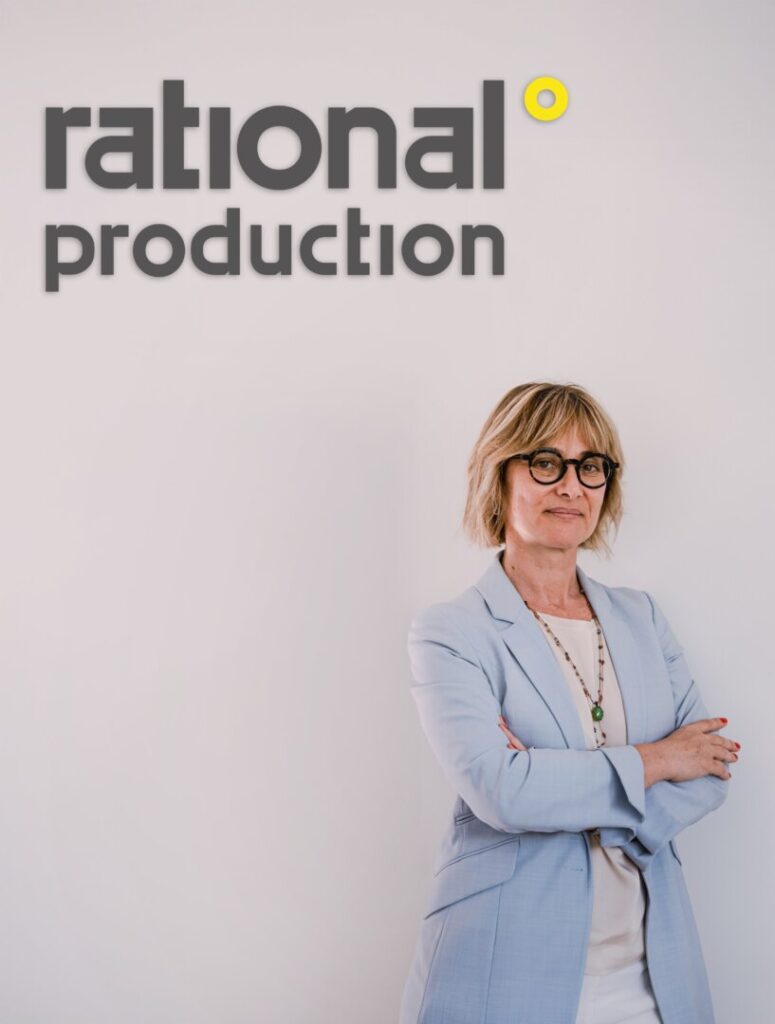
For me, the visit was interesting not only from a technological point of view. I was equally curious to meet the owner of the company, Rossella Po, a third-generation member of the founding family behind Angelo Po, a brand also represented by Coninvest. At our request, Rossella agreed to an interview, and the conversation became much more than a factory visit. It was a discussion about the history of a family business, female leadership, responsibility, values and new beginnings.
A family in which the company was part of everyday life
Rossella Po’s name is closely connected to Angelo Po, one of the defining companies in Italian professional kitchen technology. Her grandfather, Angelo Po, founded the Carpi-based company in 1922. He started as a blacksmith, making iron structures, bed frames, gates and fences, and later began producing kitchen stoves. From this workshop grew a company group that later became one of Italy’s leading manufacturers of professional kitchen equipment.
For Rossella, the company was a natural part of family life from childhood.
“It was like in many other traditional Italian families at the time. We are a Catholic family, and we are still very close today,” she recalled.
One of the early symbols of the family business was a small bee. The symbol expressed well the mindset on which the company was built: diligence, perseverance and careful step-by-step construction. Just as bees build their hive gradually, the story of Angelo Po was also built generation by generation.
Angelo Po had five children, but only three of them were involved in the company: Rossella’s aunt, her father and her uncle. The work of the second generation was decisive in the company’s growth. Her father and uncle were constantly travelling, building export markets and expanding production capacity to an industrial scale. Her father was often away, but at weekends he always tried to spend quality time with the family.
The affairs of the company, however, were also present at home. In a family business, work rarely remains within the walls of the office. Decisions, dilemmas and successes continue to live on around the family table.
Female roles in a traditional family business
One of the most sensitive and interesting parts of our conversation was when Rossella spoke about the women in the family. Her aunt devoted her entire life to the family business, often working in the background. At that time, it was not yet natural for female family members to receive official ownership or leadership roles, even when their work was indispensable.
Rossella sees her as someone who quietly, but in an important way, helped prepare the path for the female leaders of the next generation.
This background makes Rossella’s own career particularly meaningful. She did not simply participate in the life of the family business; she also took on leadership responsibility within it. The generational transition, however, was far from simple.
Young at the leadership table
Rossella was just over twenty and still a university student when, after the early deaths of the defining members of the second generation — her father and uncle — responsibility passed to the third generation. By then, the company had already reached a significant size, which made it especially important that the second generation had previously built a professional management structure.
The company’s managing director played a key role in helping the younger generation take over responsibility. Rossella would later also regard him as a professional mentor. The family structure, however, was complex. Rossella has two brothers while her uncle had ten children. As a result, the third generation entered the life of the company with many people involved, different points of view and different ideas.
“We all worked in the family business in some form and tried to have a say in the decision-making process,” Rossella recalled.
It is therefore not surprising that every strategic decision led to long discussions. This is one of the greatest challenges of family businesses: how to align ownership emotions, family ties and the long-term interests of the company.
After her father, her uncle and her brother, Rossella became President of the Board. She studied accounting and finance and still considers this knowledge fundamental to her work as a leader.
“Numbers are very important. Numbers speak for themselves. If the numbers do not work, there is no business model that can stand the test of time,”
she said.
This became one of her leadership mantras.
The other area that has always been close to her is the human side: HR, training, knowledge transfer and the development of people. She is convinced that every company is built by people. If people feel well, develop, receive proper training and their knowledge becomes visibly embedded in the operation, then the company also develops in a healthier direction.
Corporate transformation and a new chapter
Over the years, the family ownership structure gradually changed. Rossella’s branch of the family acquired the shares of several cousins, and later one of her brothers also chose an independent path, taking Enofrigo, an already established company within Angelo Po, into a separate company that is today renowned for its beautiful wine coolers.
The next major turning point came in 2016, when Angelo Po Group, including the refrigeration brand Sagi, was then acquired by the American Marmon Group. Rossella speaks discreetly about the details of the transaction, but from the perspective of her personal journey, this period was an important milestone.
Following the change of ownership, she remained President of the company for another two years, helping the transition and passing on the culture, values and ambitions that were part of the Angelo Po family story.
At the same time, she kept the smallest production unit outside this process. This later became the company she now owns and leads together with her husband: Rational Production.
Rossella spent 25 years in the world of Angelo Po. She entered leadership positions at a young age and learned a great deal from those who stood beside her, particularly from the company’s Managing Director, who became her professional mentor.
Beyond the family business, she also took an active role in the wider business community. At the invitation of others, she held various positions, including serving in the leadership of the young entrepreneurs’ group of Confindustria in Modena. Modena is one of Italy’s most important industrial regions, where entrepreneurial culture, manufacturing know-how and connections to international markets are especially strong.
Rossella attended numerous conferences and international meetings in order to learn, build relationships and acquire broader, cross-sector knowledge. As she put it, she had to learn early how to stand on her own, because already at a young age she had to face managers, decisions and conflicts without the protective support of her father behind her.
Rational Production: an independent leadership era
Over the past ten years, Rossella’s attention has increasingly focused on Rational Production. Under her leadership, both the company’s revenue and headcount have doubled.
She says she enjoys leading a company where she can truly take independent responsibility for strategic decisions. One of her first important steps was to create a value compass, developed together with her management team during an off-site weekend.
At the centre of the value compass stands the company’s mission. Around it are the vision, the values, the behavioural principles and the brand message.
Rational Production is a specialist in food distribution systems. Their mission is expressed in Italian as:
“Portiamo nutrimento in modo sano e sicuro.”
In English, this means: bringing nourishment in a healthy and safe way to those who need it.
This sentence goes beyond technology. Especially when we consider that the company’s systems often operate in hospitals, nursing homes, schools and other community care environments. In these places, food is not merely a service, but also a matter of care, safety and daily quality of life.
Responsibility towards the community
For Rossella, it is important that the company gives back to the environment that made its growth possible. Today, we call this social responsibility, but she prefers not simply to talk about it, but to act.
Rational Production actively participates in various international ESG projects.
At this point, our conversation almost imperceptibly turned towards the present and future of Rational Production. Rossella spoke with increasing enthusiasm about how she is building this company today, what role she sees for food distribution systems, and how a manufacturing company can be a responsible actor from technological, human and social perspectives at the same time.
We will report on this in more detail in our next article.