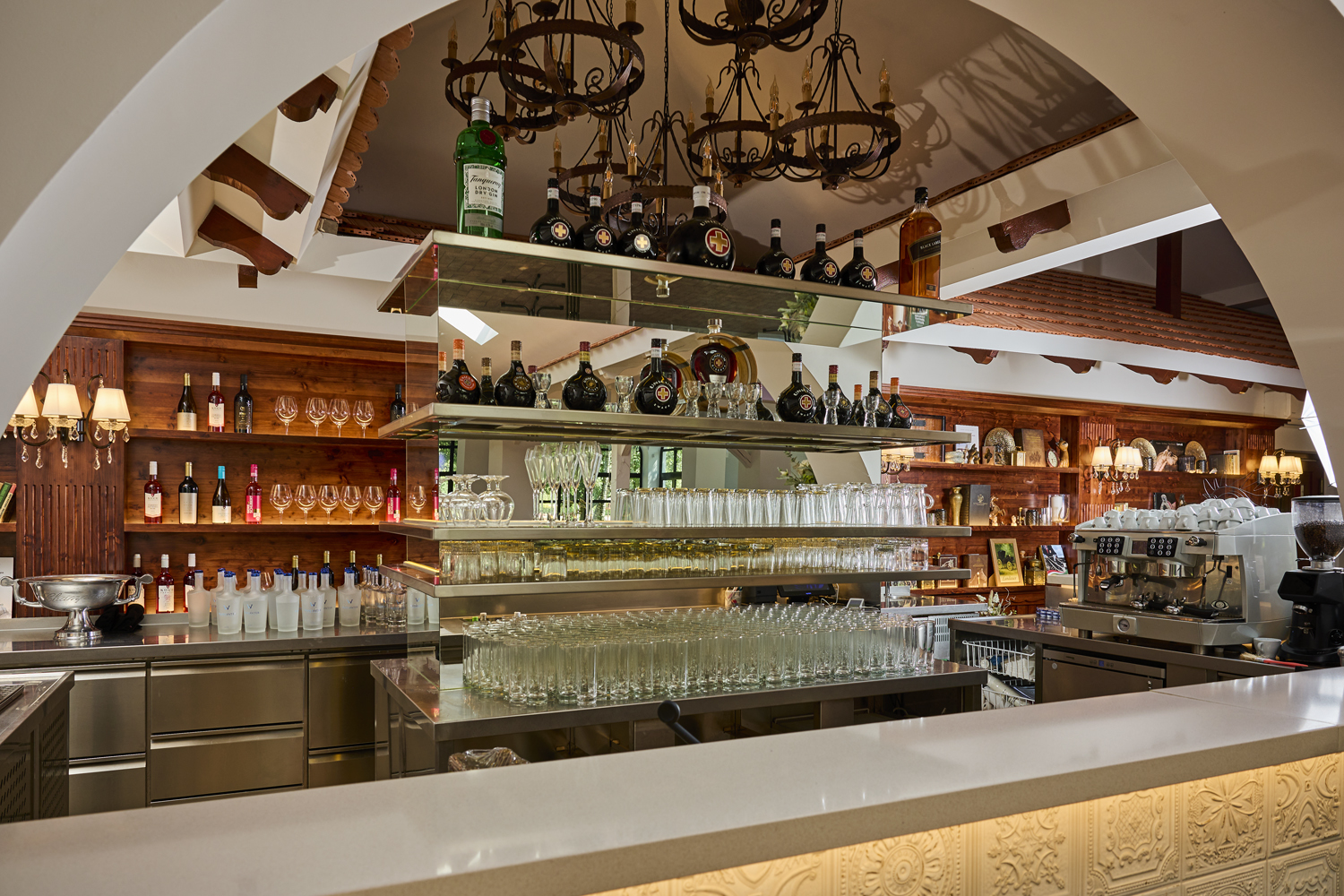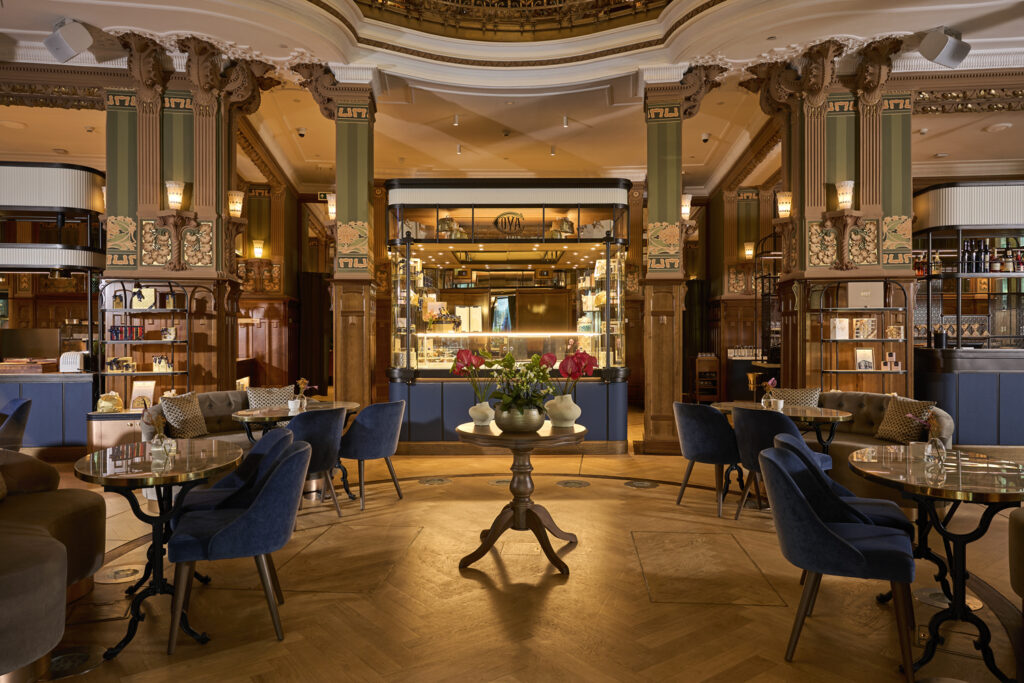
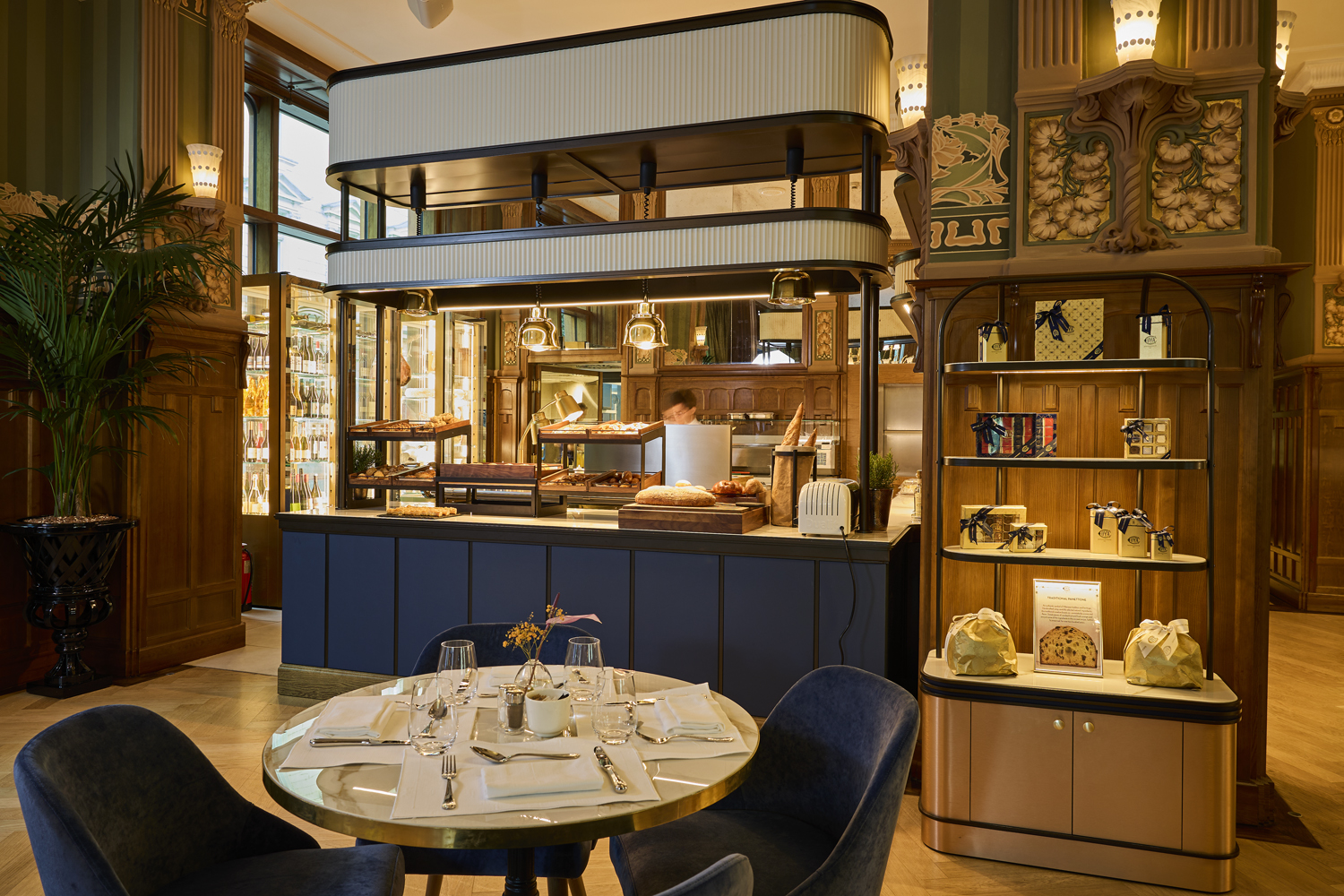
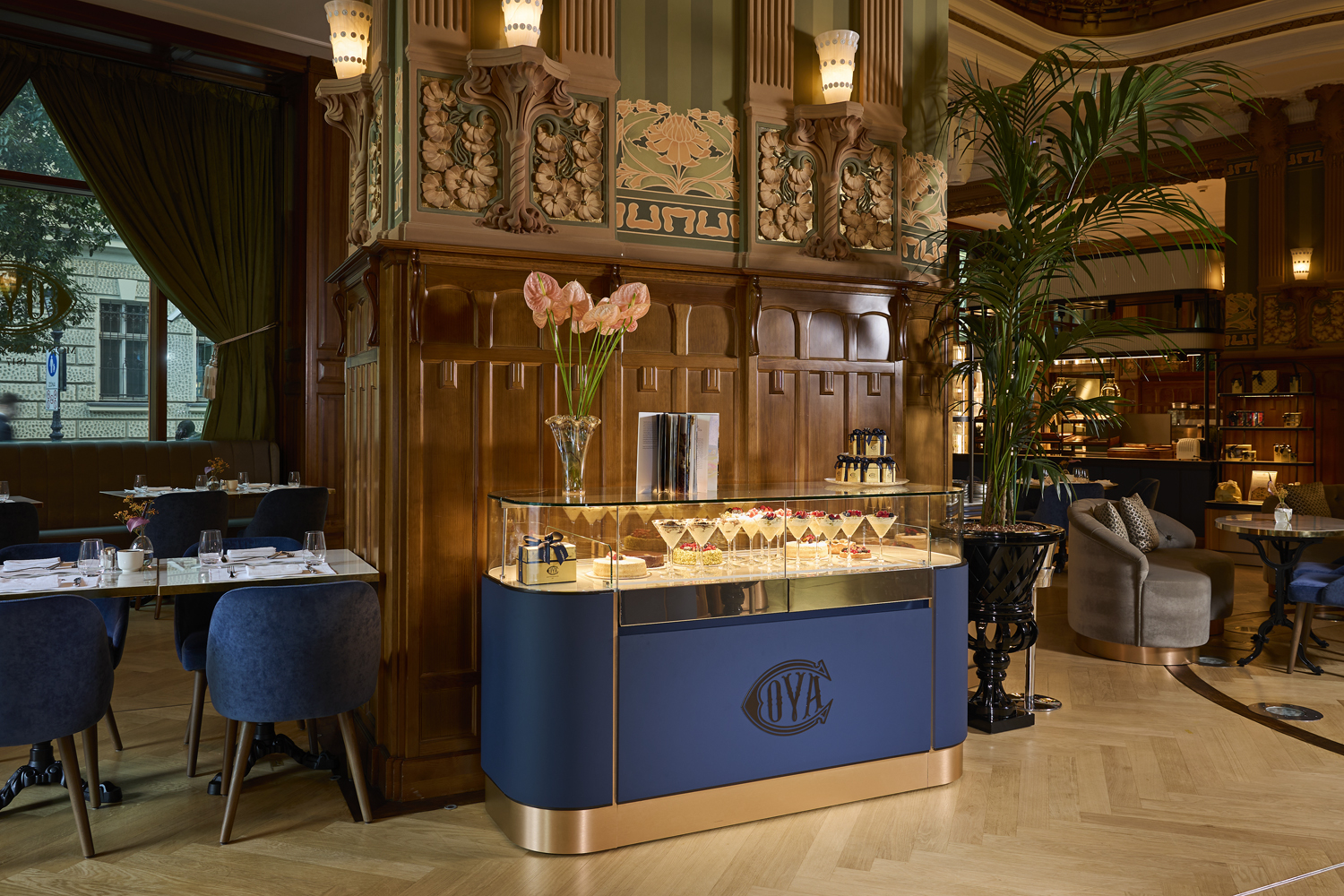
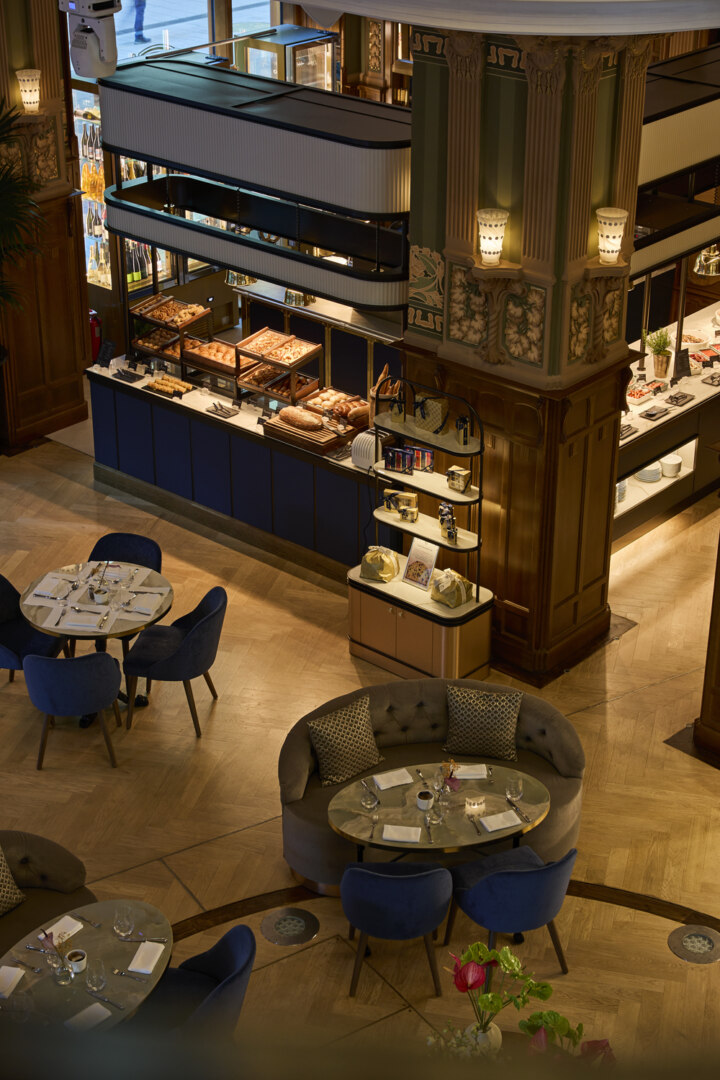
At first glance, the interior of Cova Budapest appears elegant, airy, and effortless. The curved counters, bronze accents, sophisticated display cases, distinctive furniture, and the pastry pavilion standing in the center of the space come together to form a harmonious whole. To guests, everything feels natural, as if the café had always been part of the Matild Palace.
In reality, however, this harmony is the result of months of planning, ongoing consultations, and numerous custom design solutions. Coninvest’s task was not only to bring Yeşim Kozanlı Architecture & Interior Design’s interior design concept to life, but also to adapt it to the specific conditions of the historic setting, while ensuring that every piece of furniture, textile, and detail precisely met Cova’s international branding guidelines.
Mirjam Kertész, the founding owner of Coninvest, has been working on the development of professional hospitality spaces for more than three decades. In her work, she always strives to ensure that interior design, technology, and operations form a unified whole.
“In a well-designed space, every detail serves a purpose. At Cova Budapest, guests see elegant counters, refined materials, and harmonious spaces; behind the scenes, however, countless decisions were made that were shaped simultaneously by the historic setting and the expectations of the international brand. In this project, our task was to bring Cova’s more than 200-year-old heritage into the historic spaces of Matild Palace while fully preserving the building’s character.”
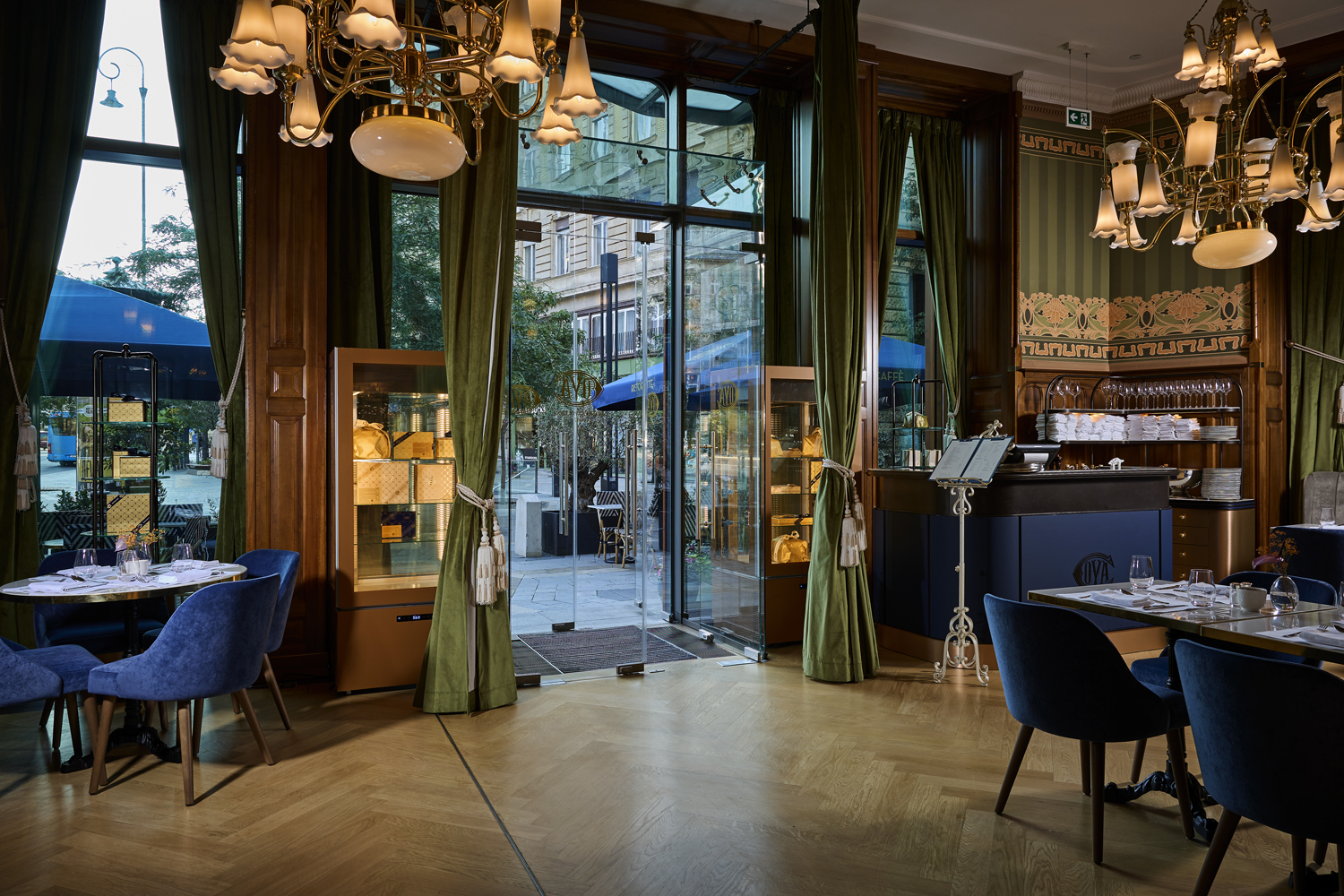
A historic building always influences the design
In a newly built restaurant, the interior designer has almost complete freedom to shape the space. In a historic building, however, entirely different rules apply.
In the case of Matild Palace, every decision was influenced by the original architectural elements. The historic walls, columns, and decorative details were not only elements to be preserved but also features to which all new installations had to adapt.
“Cova is an extremely strong international brand with a well-established identity and detailed interior design guidelines. We had to harmonize these with the characteristics of the Matild Palace. The key to the project’s success was that we consistently upheld the same standards of quality throughout the process with the client, the Turkish interior design team, and Coninvest’s experts,” says Mirjam Kertész.
The furniture had to be both beautiful and versatile
Cova Budapest is not just an elegant café. In the mornings, it serves as the Matild Palace’s breakfast restaurant, while during the day and in the evening, it welcomes guests as a classic Italian café.
This dual function also shaped the design of the furniture.
“Different ergonomic considerations apply in a café than in a restaurant. The Cova chairs had to meet both of these needs. They had to provide a seat height and support that would be comfortable even during a longer coffee break, while also offering sufficient comfort for a full meal,” says Gabriella Bakos-Tóth, head of Coninvest’s furniture division.
Of course, the guest doesn’t notice any of this. They simply find the space comfortable. Behind the scenes, however, there is a lengthy design process to ensure that the furniture serves both functionality and elegance.
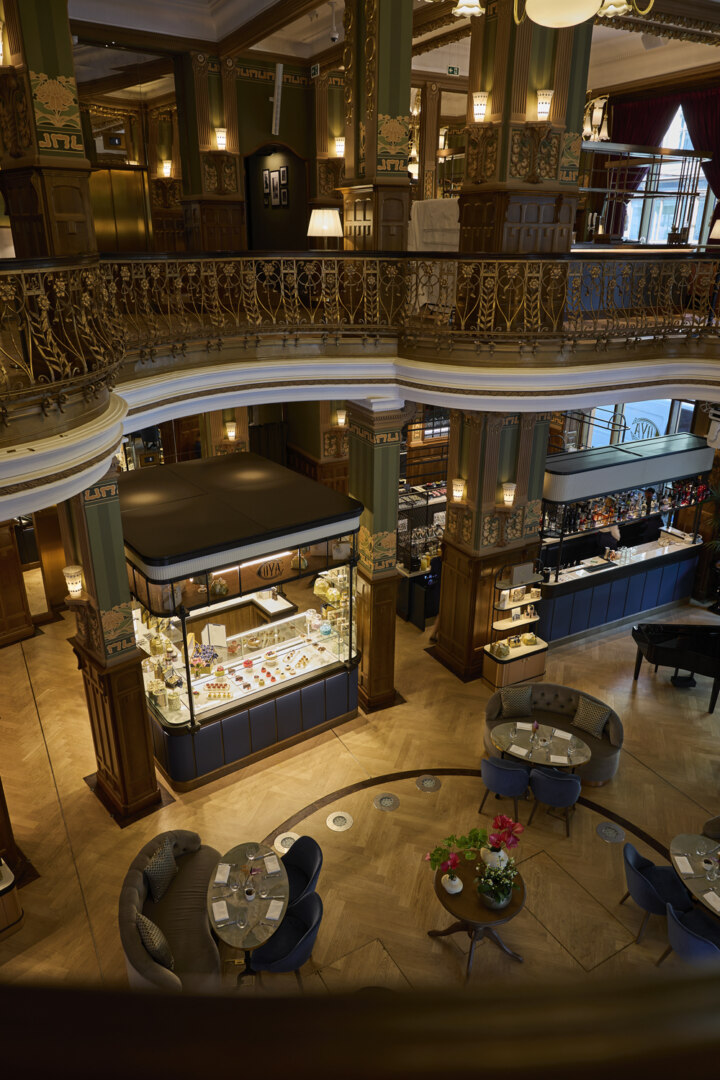
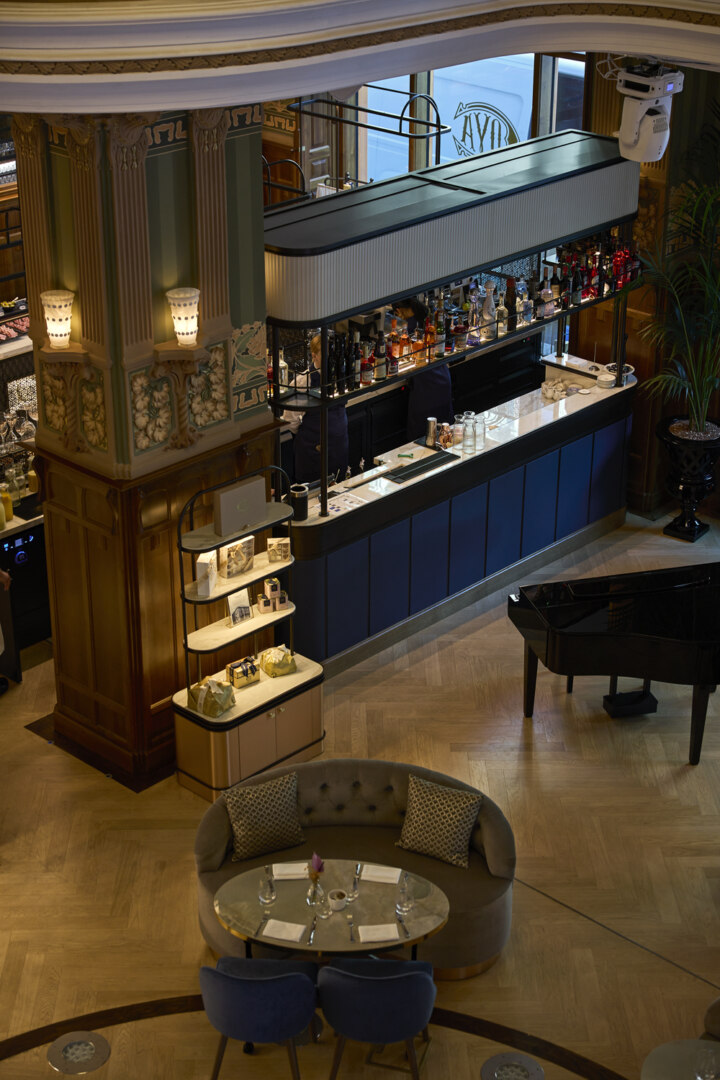
Not everything that looks new is actually new
Not all of the furniture in this project was made from scratch.
The structure of the existing benches was in good condition, so instead of replacing them entirely, Coninvest’s experts decided to refurbish them.
“We kept the basic framework but completely reimagined the benches. We adjusted their dimensions and created more comfortable seating surfaces, so the original furniture now fits perfectly with Cova’s new interior and meets today’s guest needs,” says Gabriella Bakos-Tóth.
This solution simultaneously promoted sustainability, cost-effectiveness, and the guest experience. The refurbished benches are now an integral part of Cova Budapest’s interior, while providing a higher level of comfort than before.
An international brand knows no compromises
Cova operates with a consistent visual identity worldwide, so during the Budapest project, every piece of furniture, textile, color, and surface had to strictly adhere to the brand’s specifications.
“The shapes, colors, fabrics, and materials were all specified. Even for the draperies, we were allowed to use only materials approved by the interior designer. Our task was to bring the designs to life with the greatest possible precision, while supporting the process with professional recommendations,” says Gabriella Bakos-Tóth.
Coninvest’s scope of influence was primarily evident in the professional consultations and construction proposals. In every case, the final decisions were approved by the Turkish management of Matild Palace and the interior designer, ensuring that the Budapest Cova fully aligns with the brand’s international image.
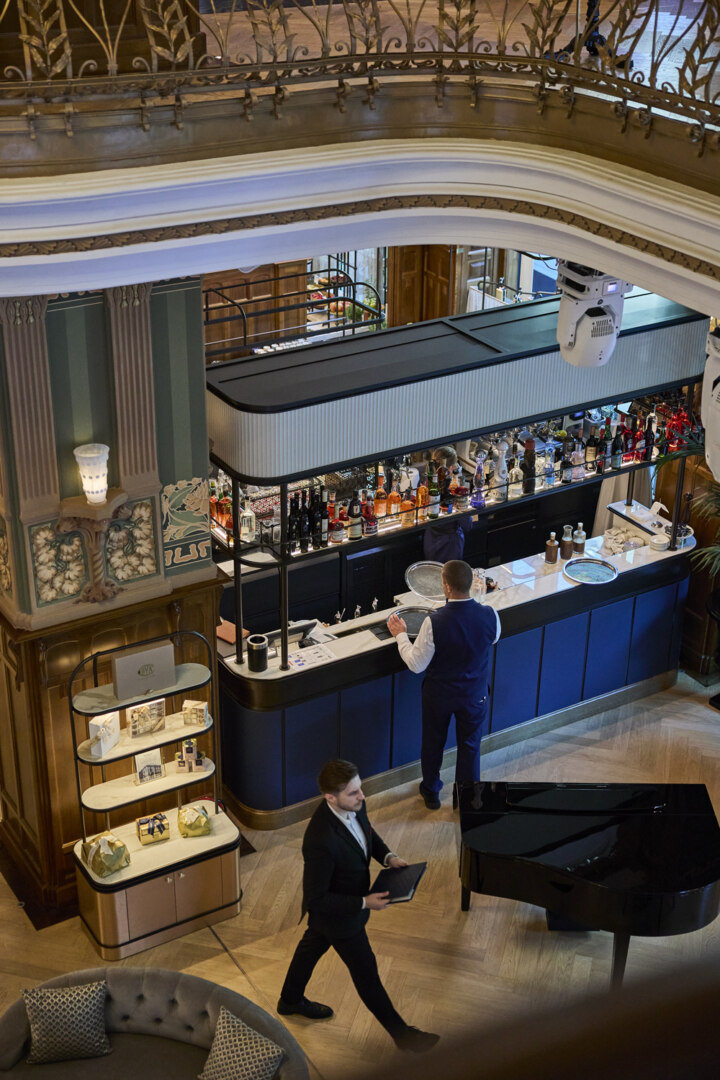
It’s the details that make the experience complete
The interior of Cova Budapest works well not because of any single striking element.
The proportions of the space, the use of materials, the textiles, the restored and custom-made furniture, and the carefully coordinated details all come together to create the elegant atmosphere that guests sense from the very first moment.
“What I’m most proud of is that, despite the extremely strict interior design requirements, we managed to preserve elements that have taken on new roles within the space. The restoration of the old benches, strict adherence to international standards, and the professional collaboration with the Turkish design team are, for me, the most important achievements of this project,” emphasizes Gabriella Bakos-Tóth.
When construction itself is a creative endeavor
The Cova Budapest project is a good example of how interior design construction is not merely about bringing plans to life. In such a complex project, working out the details, strictly adhering to international standards, and respecting the historic setting are just as important as the visual outcome itself.
“The best feedback for us is when a guest simply feels comfortable in the space. In those moments, they don’t see the compromises or the work behind it—they see a harmonious interior. That’s exactly what we wanted to achieve at Cova Budapest,” concludes Mirjam Kertész.
The end result is a space that simultaneously preserves Cova’s more than 200-year-old tradition, respects the architectural heritage of Matild Palace, and authentically reflects Coninvest’s professional approach.