In a hospital, nursing home, school or large corporate catering system, the journey of food rarely ends where it is prepared.
In many cases, the kitchen and the place of consumption are physically separated. Food has to reach the patient’s bedside, hospital wards, a school dining room, different points of a company canteen or even several buildings within the same site. During this journey, its temperature, quality, safety and enjoyment value all have to be preserved.
This is the task Rational Production specialises in.
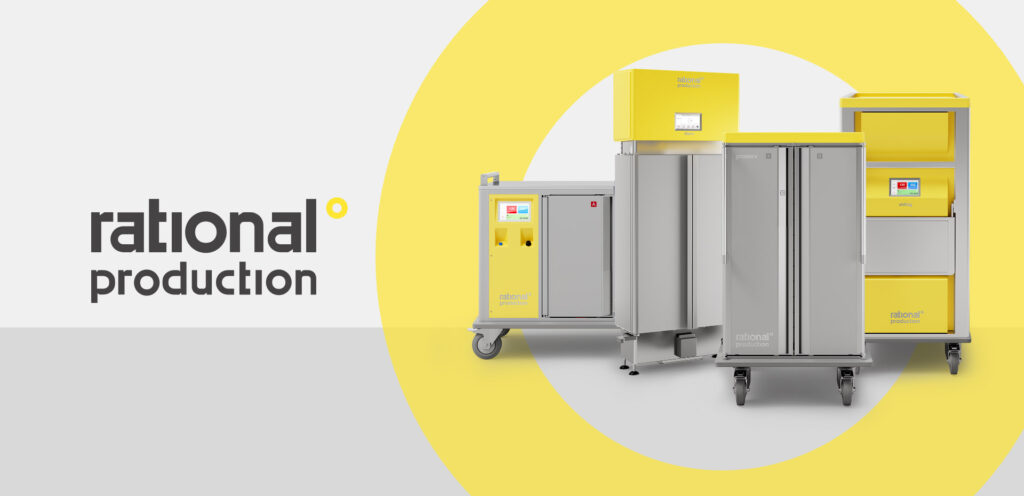
Located in Northern Italy, near Bergamo, the company does not manufacture classic kitchen equipment. It develops and produces food distribution systems: mobile, regenerating, hot-holding, refrigerated and combined trolleys that support one of the most important, yet often invisible, parts of institutional catering.
A specialist in a highly specific market
The story of Rational Production began in 1998, when Ivan and Diego Cattaneo founded the company. Both came from an engineering background. They had previously worked in research and development as well as production management for companies that had already been dealing with institutional catering, food transport and technological development in the 1980s.
This professional background became the foundation of Rational Production. From the beginning, the company focused on a highly specialised area with a high level of responsibility: how to deliver food safely, hygienically and at the right temperature to the place where it will finally be consumed.
The company’s market is not about spectacular front-of-house solutions, but about highly responsible background systems. In the case of a hospital food distribution trolley, for example, it is not enough for the food simply to remain warm. Hygiene, easy cleaning, ergonomics, HACCP requirements, operational safety, serviceability and reliable daily performance are all equally important.
This is why Rational Production does not simply manufacture products. It develops complete systems for different processes within institutional catering.
Connections with BLANCO and Angelo Po
Early international collaborations also played an important role in the development of Rational Production. In 2005, Rational Production began a collaboration with BLANCO. This partnership marked an important step in the mutual development of both companies, contributing to their growth and international recognition for their products and technological expertise.
However, from the perspective of the company’s history, the key point is that this period helped Rational Production strengthen its position in the specialised market of food distribution systems. In 2006, Angelo Po acquired Rational Production. The company became part of the Angelo Po group, and during the following years Rational Production manufactured several technological solutions connected to this partner and group structure.
In later years, however, it became increasingly clear that Rational Production’s own development path required a more independent operation. The company’s specialised knowledge, product development focus and international opportunities went beyond a narrower cooperation model.
The next major turning point came in 2016. When Angelo Po was sold, Rossella Po and her husband, Giorgio Tedeschi, retained Rational Production. From that moment on, the company has operated as a fully independent manufacturer under Rossella Po’s leadership.
A new ownership era with Rossella Po
 Rossella Po’s name is familiar to those who know the Italian professional kitchen technology industry closely. She is a third-generation member of the founding family behind Angelo Po and held leadership roles for many years in the family company with roots in Modena.
Retaining and independently developing Rational Production opened a new chapter for her. Today, the company is no longer a small unit within a larger group, but an independent, specialised manufacturer with its own strategy.
Over the past ten years, under Rossella Po’s leadership, Rational Production has doubled both its revenue and workforce. The company has also expanded internationally, establishing a French subsidiary in 2015 and a German company in 2025.
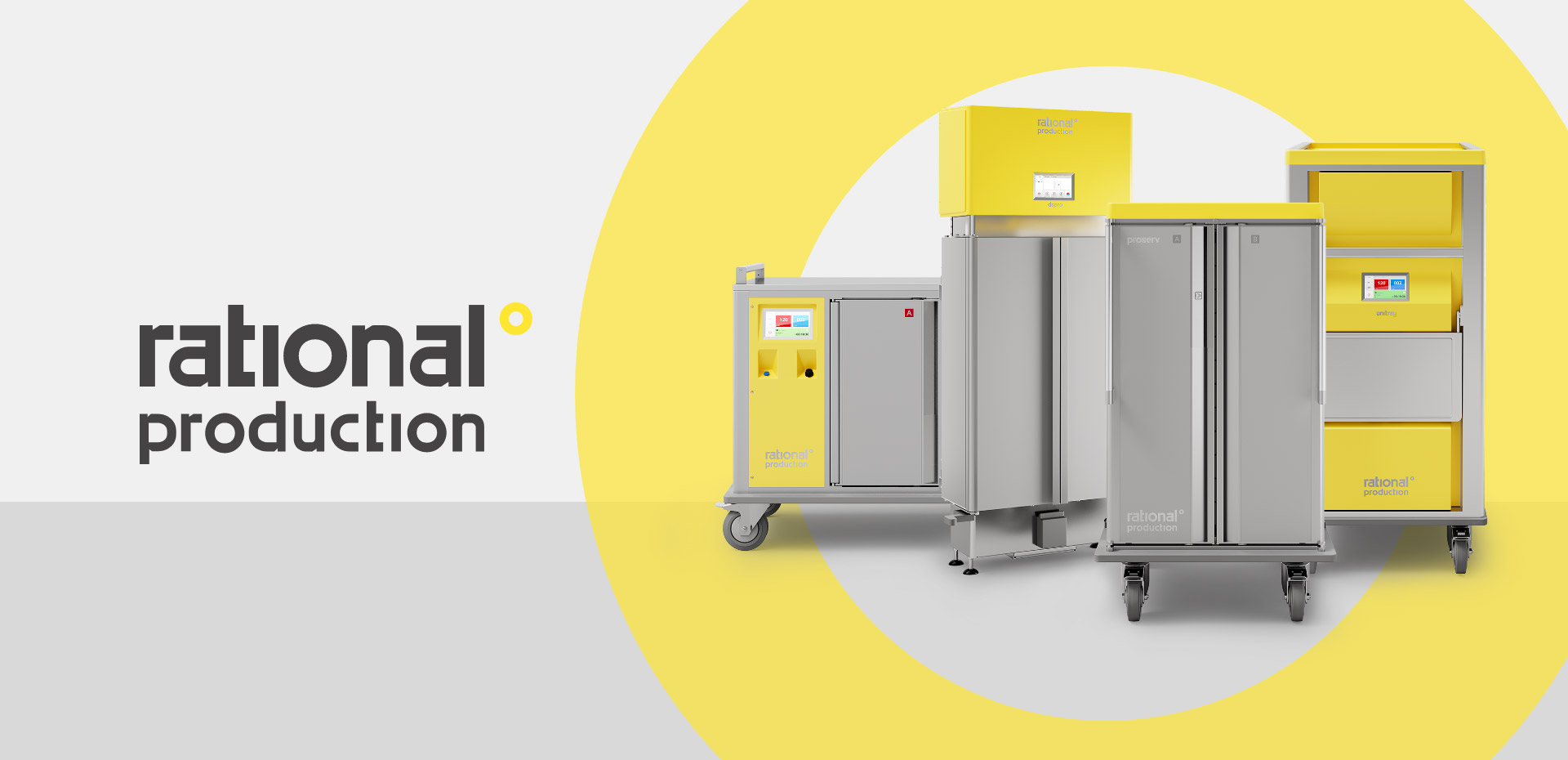
In 2023, Rational Production celebrated its 25th anniversary. The anniversary was not only an opportunity to look back, but also to refresh the brand identity. The logo and visual language were redesigned, with a stronger focus on yellow and on the degree symbol, which reflects the company’s expertise in temperature management. The brand retains a strong and distinctive identity across all markets, with certain elements receiving greater emphasis in each one: in Germany, for example, stainless steel and the brand’s strong connection to hospital technology are particularly emphasised.
Behind every product, there is an operating model
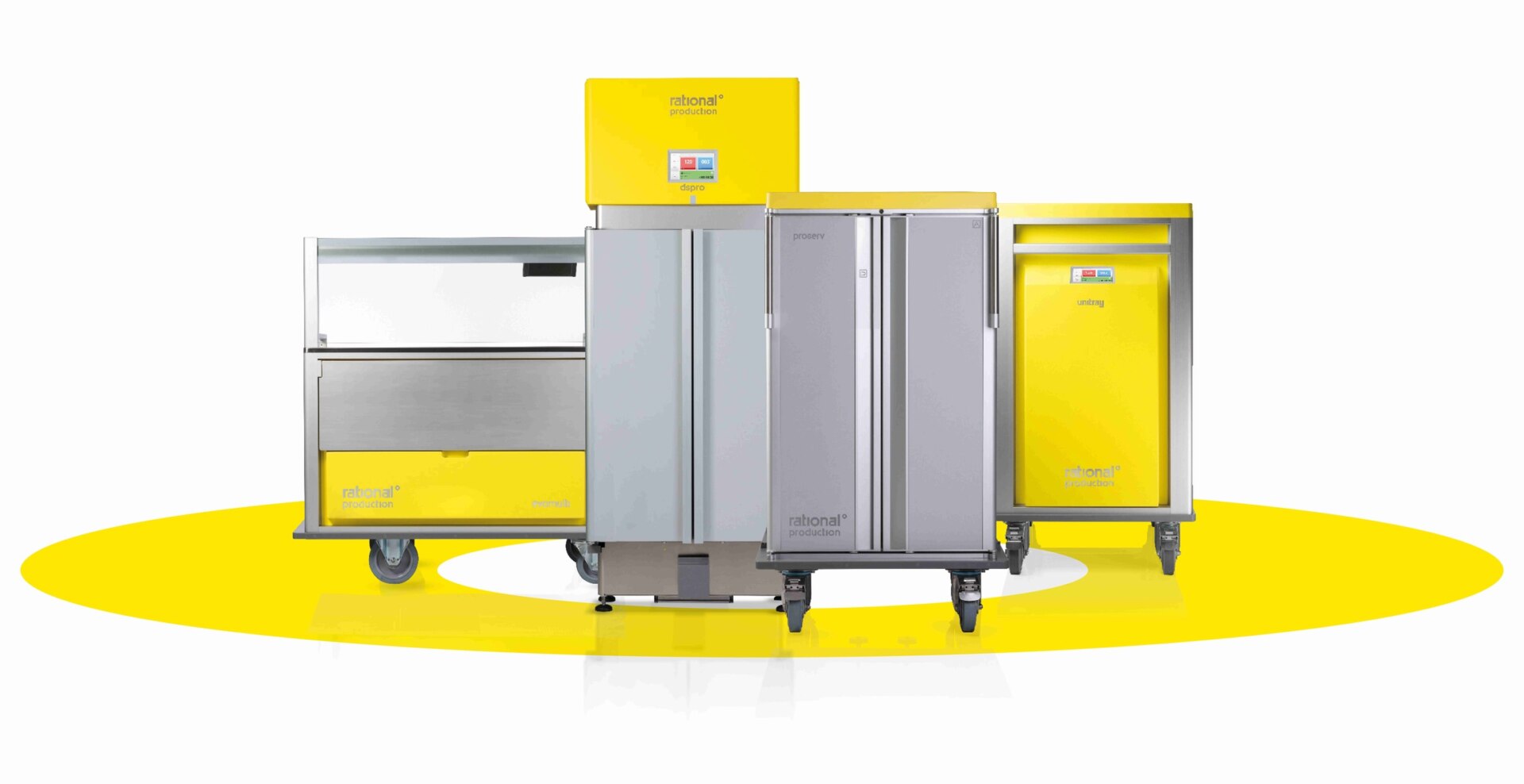
Rational Production’s main product groups are hot & cold tray, breakfast tray, bulk food and hybrid distribution systems.
These solutions respond to different operating situations.
In hospitals, personalised tray-based meal distribution is often required. In nursing homes, the temperature, quality and easy serviceability of food become key issues at the same time. In school or corporate kitchens, larger quantities of food often need to be moved safely and then served at several locations or at different times.
Hot & cold tray systems make it possible for hot and cold food to travel through the same distribution process, while remaining in separate temperature zones. Breakfast tray solutions respond to the specific requirements of breakfast service. Bulk food systems are designed for moving and serving larger quantities of food, while hybrid distribution systems flexibly combine the advantages of tray-based and bulk food distribution.
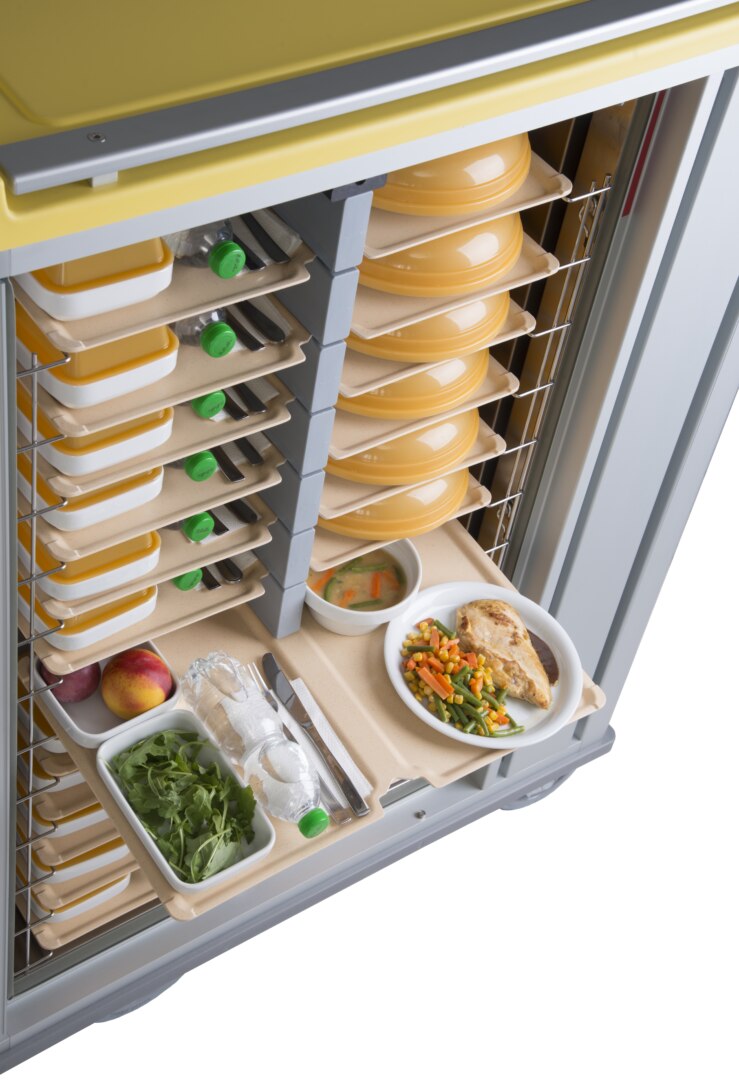
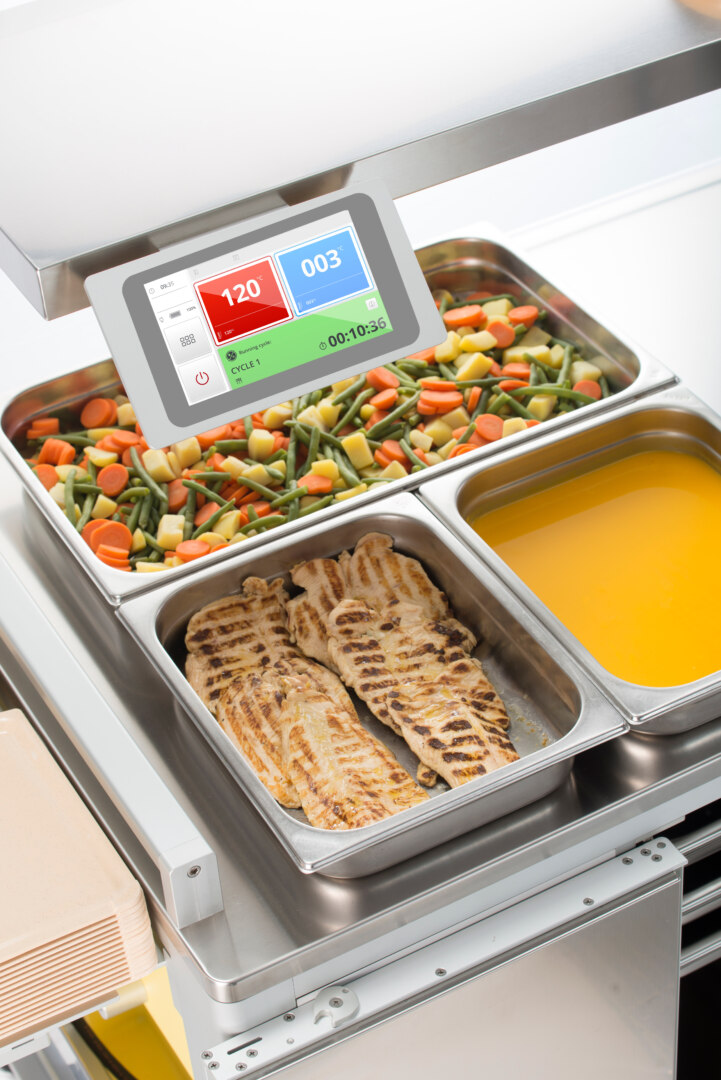
Several of the company’s technological solutions support this complexity. Aluminium-frame constructions, for example, allow for a lighter yet stable structure. Airflow and temperature-control systems help ensure that hot and cold dishes arrive at the serving point in the right condition. Intelligent controls are important from the perspective of food safety and operational monitoring.
From the outside, these details may seem like technical subtleties. In daily operation, however, they are exactly what determine whether a catering system is truly safe, efficient and sustainable.
When a trolley becomes a mini buffet
Among the products, particularly interesting are the hot-holding and serving trolleys whose side wings can be opened, transforming them in just a few movements into a mini self-service buffet.
This shows that Rational Production’s thinking does not stop at transporting food. The question is not only how food gets from one point to another. It is just as important how, at the serving point, it becomes an easy-to-use, hygienic and user-friendly system.
In an institutional catering environment, this can make a significant difference. The work of the staff becomes simpler, service can be faster, and the quality of the food can be better preserved.
Lean manufacturing in a human-scale factory
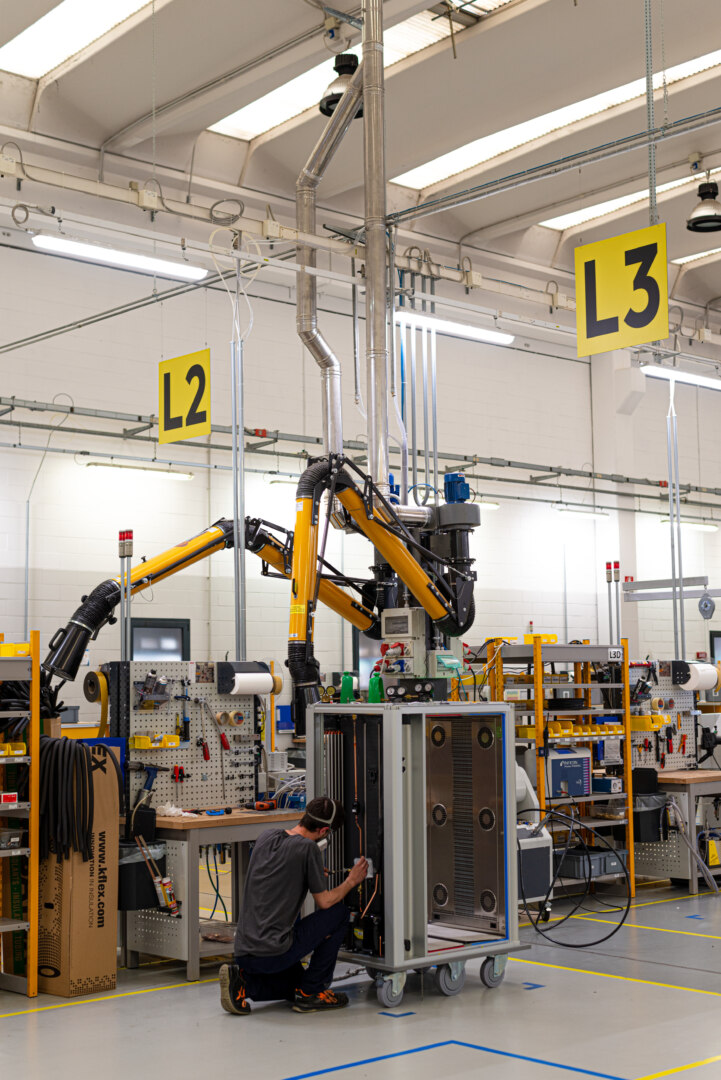
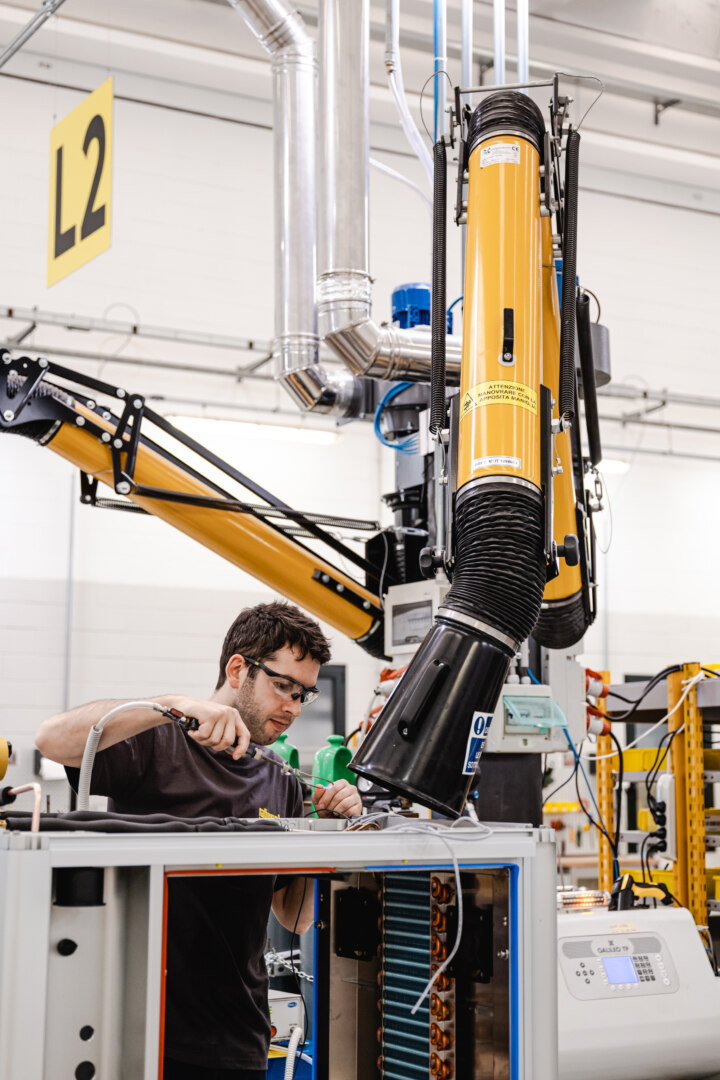
During the visit to the factory near Bergamo, one of the most interesting impressions was how orderly, transparent and disciplined the manufacturing environment was.
After 2020, production was completely reorganised with the involvement of a renowned lean management consultant.
The starting point was the company’s feeling that it had outgrown its existing premises and would need greater production capacity. In the end, the process took a different direction. With the help of a lean manufacturing approach, the need was not necessarily for a larger space, but for a much better organised operation.
Today, production uses a so-called “picker” system. This means that the components required for the trolley to be manufactured are prepared in advance on a mobile unit, which is then taken to the relevant workstation. As a result, the employee carrying out the assembly does not have to leave their station, because all necessary parts and tools are available there.
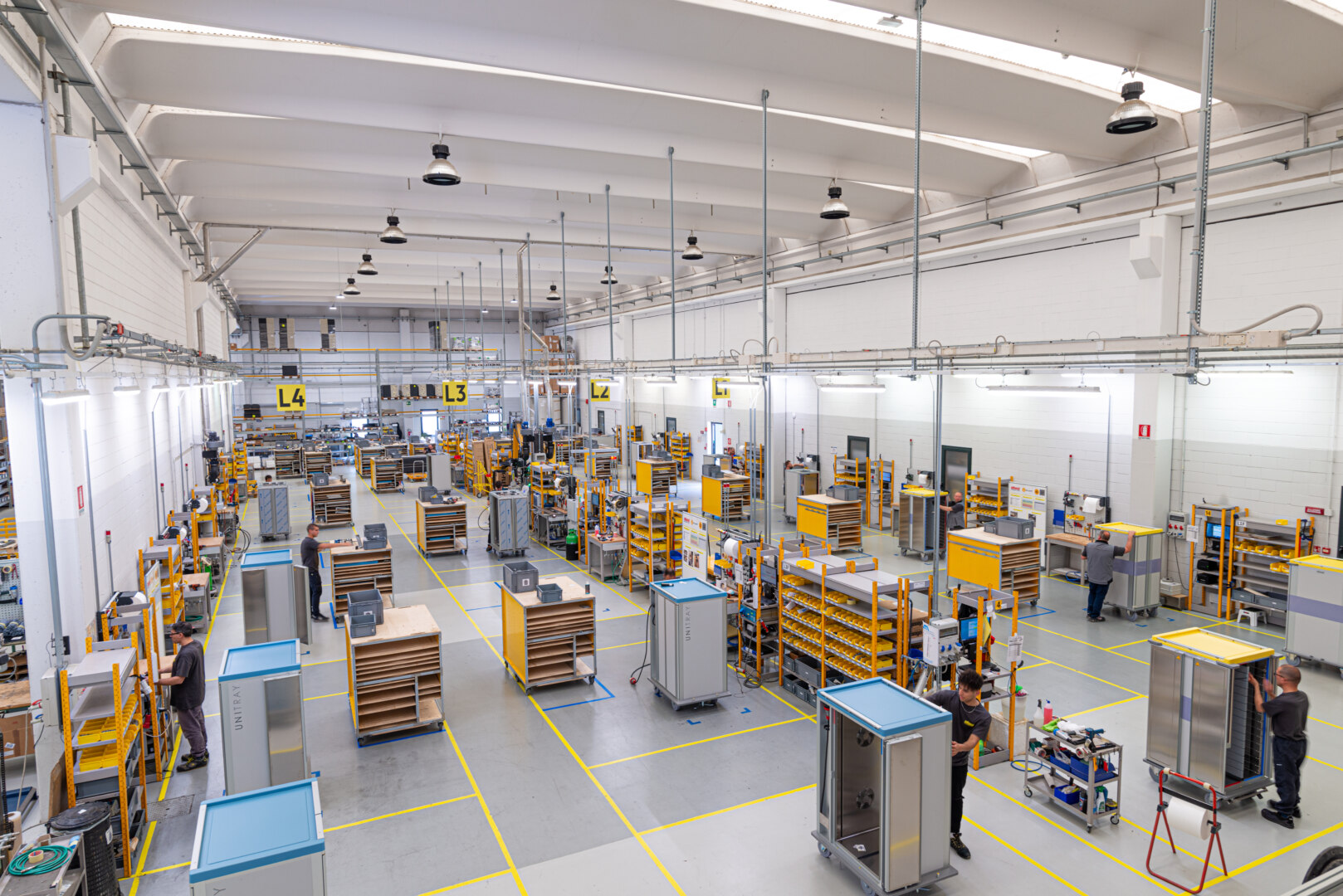
The method improves efficiency, reduces unnecessary movement and supports consistent quality.
The cleanliness and order of the factory were striking. At every workstation, tools, equipment and materials have clearly defined places. The system is also visually traceable: photos help ensure that every tool and component is always returned to exactly the same place.
This kind of discipline is not an end in itself. In such a manufacturing environment, order is part of quality assurance.
Ethics, environmental responsibility and sustainability
Rational Production also places strong emphasis on ethical operations. The company’s code of ethics applies not only to its own activities, but also reflects the importance it places on customers and suppliers accepting principles connected to environmental responsibility, fair business conduct and a sustainable manufacturing mindset.
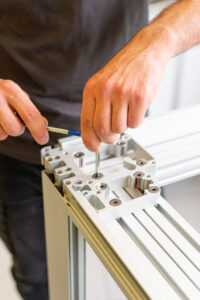
Sustainability is not present only as a corporate statement, but also in product development. Rational Production was among the first companies to develop aluminium-frame hospital food distribution trolleys, supporting more environmentally conscious institutional catering through lighter construction, durability and energy-efficient operation.
The aim is not only for the product to have a long life cycle, but also for it to operate reliably, efficiently and with the least possible waste in everyday use.
References in industrial and institutional environments
Rational Production systems are primarily used in hospitals, nursing homes, schools, corporate kitchens and industrial catering environments.
One of the company’s key references is a facility completed in 2020 for a premium automotive group in Eastern Europe, where Rational Production’s regenerating and hot-holding trolley system to serve employees across different production units.
The company has also supplied solutions for corporate environments such as the UniCredit headquarters in Milan.
These projects clearly show that food distribution is not only a healthcare or social-care issue. At large industrial sites, corporate campuses and head office buildings, it is equally important for catering to rely on a reliable, well-organised and sustainable background system.
Value compass and responsibility
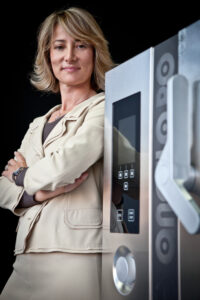 Values play a central role in Rossella Po’s leadership approach. Together with the company’s management, she created a value compass during an off-site weekend, and this compass still defines the way Rational Production operates today.
At the centre of the value compass stands the mission:
“Portiamo nutrimento in modo sano e sicuro.”
In English: to bring nourishment in a healthy and safe way.
This sentence expresses very precisely that, for Rational Production, food distribution is not merely a logistical or technological task. The systems developed by the company often deliver food to people in more vulnerable situations: patients, elderly people, children or members of large communities.
The mission is surrounded by the company’s vision, values, behavioural principles and brand promise. This structure helps the company think not only in terms of products, but also in terms of responsibility.
For Rossella, it is especially important that a company gives back to the community and the environment that have supported its growth. Rational Production therefore actively supports social and environmental initiatives at both national and international level. This commitment also extends to the well-being of the company’s employees. She believes that one of a company’s greatest assets is the ability to retain and motivate good people. Companies are driven forward by people, and in the long term, people are what make them successful.
Why this matters to Coninvest
For Coninvest, Rational Production is not simply another manufacturing partner. It is a company working in a highly specialised, high-responsibility field: where the quality, temperature, safety and delivery of food directly influence daily operations.
In healthcare, social-care, school and corporate catering, technology cannot be uncertain. There is no room for compromise in these systems, because mistakes can cause not only inconvenience, but also operational and service-related problems.
Our visit to Rational Production therefore showed us how a specialised manufacturer can become a technological partner in care.
A well-designed food distribution system is not necessarily spectacular. It is not usually the part that receives the most attention when an institution or corporate restaurant is presented. Yet every day, it makes the meals of hundreds or thousands of people safer, more organised and more predictable.
And perhaps this is the most important message of Rational Production: delivering food is not simply a transport task. When well designed, it becomes part of care.