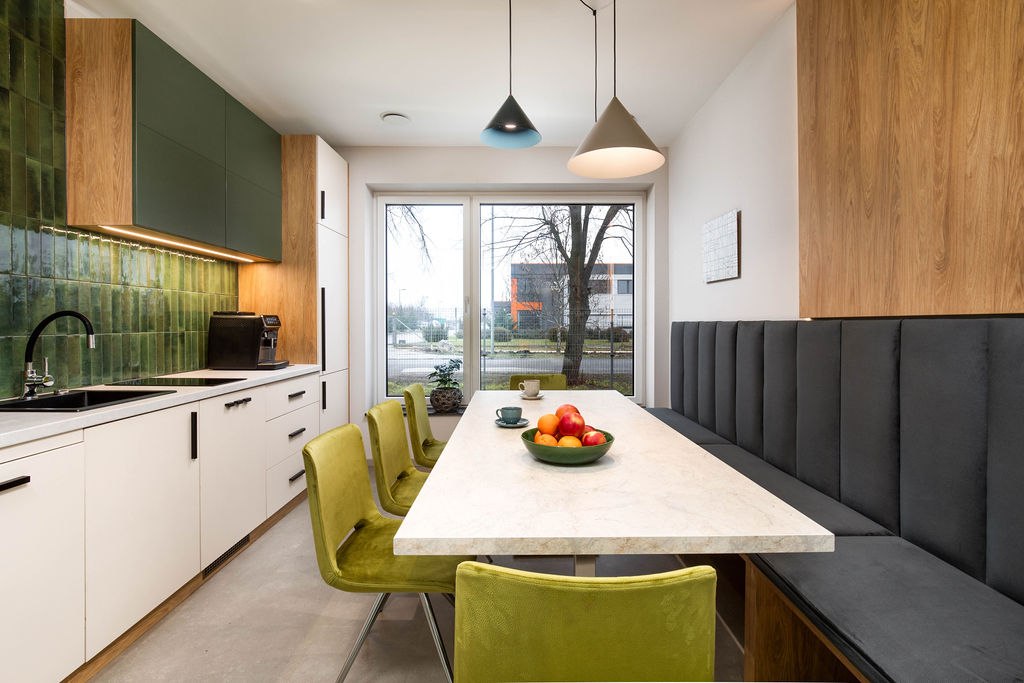
Why doesn’t furniture designed for residential use work in the hospitality industry?
Gabriella Tóth, head of Coninvest’s furniture division, explains what happens to furniture during everyday use.
When furnishing a restaurant, the question often arises as to whether specialized restaurant furniture is truly necessary. If a chair or a table works well in a home, why wouldn’t it work in a restaurant? The answer is simple, but in practice, it often only becomes clear later: home furniture and furniture used in the hospitality industry are two completely different worlds.
The difference lies not primarily in form or aesthetics, but in usage. In a restaurant, furniture is subjected to a level of wear and tear that most home furnishings simply aren’t designed to withstand.
Different uses, different strains
In a home, a chair or a table is used a few times a day. In a restaurant, the same furniture may serve dozens of guests in a single day. Chairs are constantly being pulled out and pushed back, and plates, glasses, and cutlery are placed one after another on the table surface, which is regularly exposed to moisture or heat.
International literature considers this difference so significant that it uses a separate category for furniture used in the hospitality and hotel industries. These are referred to as “contract furniture” or “commercial furniture.” This refers to furniture specifically designed for high-traffic areas.
Load tests also clearly illustrate this difference. A hospitality chair is often tested for 250,000 to 500,000 load cycles, whereas for furniture intended for a home, this is often only 10,000 to 20,000 cycles. So, what lasts for years in a living room may wear out in just a few months in a restaurant.

Structure: same on the outside, completely different on the inside
At first glance, home furniture and restaurant furniture often look very similar. The difference lies in their structure.
Catering furniture generally features a stronger frame structure, with more robust joints and materials designed for higher load-bearing capacity. For chairs, for example, steel or reinforced wood frames are much more common, as are joining techniques that can withstand constant movement.
In contrast, home furnishings often have a lighter structure. This isn’t a problem in a home because usage is much gentler. In a restaurant, however, constant stress quickly reveals the limits of the construction.
The use of materials also follows a different logic
In the hospitality industry, furniture must withstand not only mechanical stress but also constant cleaning. Surfaces are regularly exposed to water, cleaning agents, and disinfectants.
A veneered surface or delicate lacquer finish that is popular in a home can become damaged very quickly in a restaurant. The same is true for upholstery. Textiles used in the hospitality industry are often more tightly woven, more wear-resistant, and in many cases easier to clean.
The situation is similar with tabletops. A restaurant table must withstand hot plates, spilled drinks, and daily cleaning. That is why much more durable finishes are typically used here.

Ease of cleaning is a fundamental requirement
In the hospitality industry, the cleanability of furniture is a key consideration. During daily cleaning, surfaces are constantly exposed to water and cleaning agents. Furniture with poorly designed joints or materials that cannot withstand this stress will wear out very quickly.
Therefore, it is important for restaurant furniture that surfaces are easy to clean, joints do not trap dirt, and materials withstand regular cleaning.
Repairability and uniqueness also matter
In a home setting, damaged furniture is often simply replaced. In a restaurant, however, this can entail much higher costs, especially when the furnishings include dozens of identical chairs or tables.
For this reason, hospitality furniture is often designed to be repairable. The upholstery can be replaced, the seat surface can be reupholstered, and the frame can be reinforced. This can significantly extend the furniture’s lifespan.
At the same time, another important distinction is that this furniture is often custom-made. These are not off-the-shelf products, but rather solutions that can be tailored to a specific space and concept. The seats, backrests, and frames can be individually upholstered and colored, making them not only more durable but also a better fit for the interior design concept.

Design and functionality: a question of balance
Of course, aesthetics are also key in the hospitality industry. Furniture plays a major role in defining a restaurant’s atmosphere and is an essential part of the interior design concept.
At the same time, it often happens that a piece of furniture seen in an interior design catalog fits perfectly into the space, but its limitations quickly become apparent when used in the hospitality industry. In such cases, a balance must be found between appearance and functionality.
Experience shows that good hospitality furniture creates precisely this balance: it fits aesthetically into the space while also being technically prepared for everyday use.
Functionality ultimately decides everything
The difference between residential furniture and furniture used in the hospitality industry lies not primarily in form, but in design logic. Restaurant furniture is built for intensive use, regular cleaning, and long-term wear and tear.
In international practice, hospitality furniture therefore constitutes a separate category. The goal is not merely for the furniture to look good, but also for it to withstand the demands of a busy restaurant for years to come.
This is the difference that often makes furniture designed for a living room unsuitable for a restaurant. Not because it is bad, but simply because it was not made for that environment.