The day after the Intergastra trade show in Stuttgart, we took part in a special professional program: we were given a tour of the two Stuttgart cafeterias at the Mercedes-Benz Group’s Untertürkheim site, visited the Pano franchise café located in the basement of the main office building, and then toured the legendary Mercedes-Benz Museum and the two cafeterias on the Vaihingen campus.
We received the invitation because we are currently involved in the expansion and development of the kitchen at the Mercedes plant in Kecskemét. It was particularly important for Mercedes—and, of course, for us as well—to see firsthand the construction quality, architectural solutions, and technological standards of the newest cafeterias implemented at the German headquarters.

Geb 135 – The canteen of the future
Two years ago, one of the group’s most modern restaurants opened in the Geb 135 building on the factory grounds. It is an architecturally stunning structure, designed with contemporary yet timeless solutions.
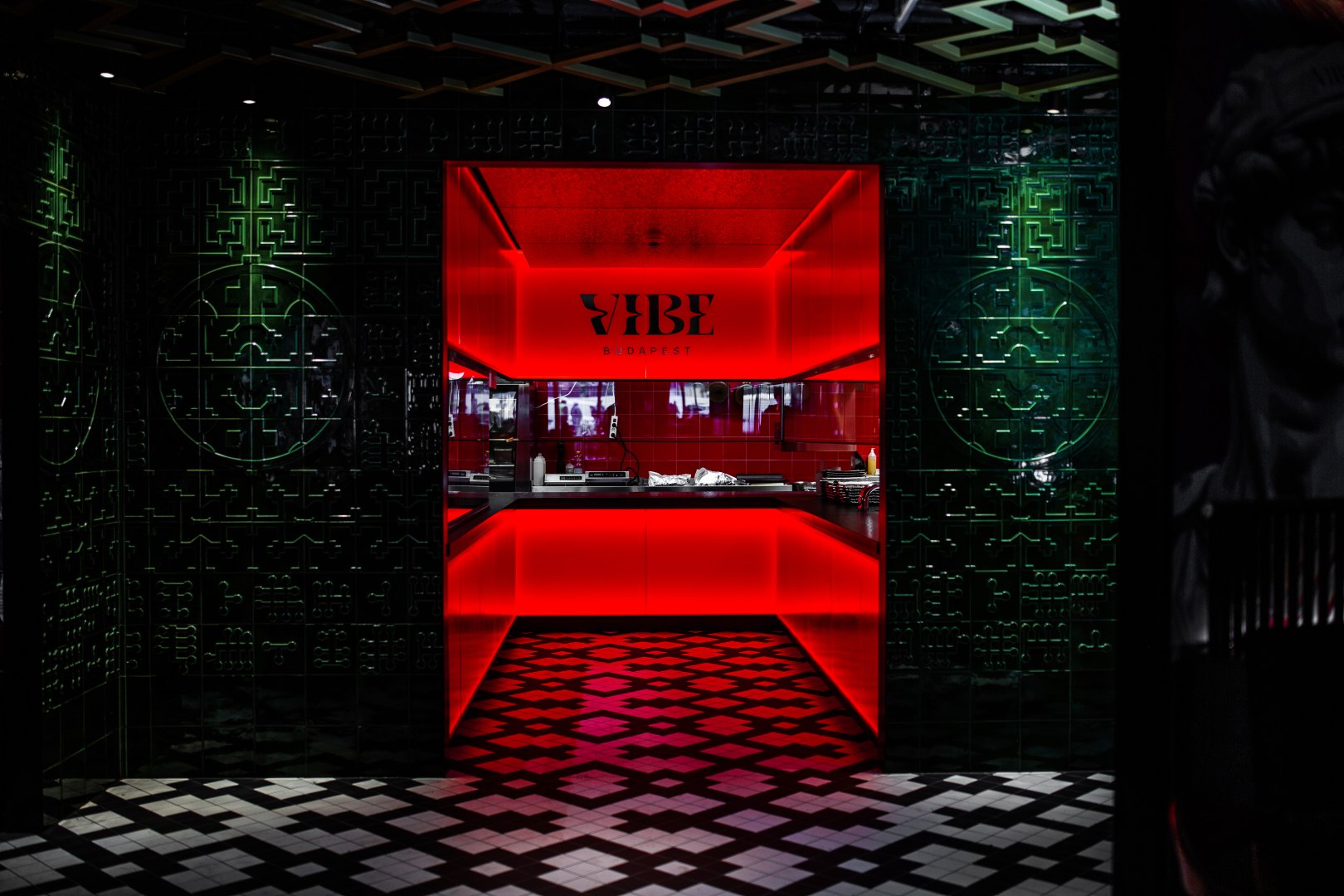
The ground floor houses a so-called food court. Germans are particularly fond of this term. Several external operators are based here: a buffet-café, an Italian-style pizzeria, and a fast-food-style kebab shop. It seems that a significant portion of the employees specifically seek out these quick, street-food-style lunch options.
Wide, elegant, monumental staircases lead up to the upper floor. Upstairs, a fantastic, spacious, high-ceilinged self-service restaurant welcomes guests. Clean lines, polished raw concrete surfaces, and oak slatted ceiling decorations—not as concealment, but as visual elements. Black-clad serving counters with granite tops, thoughtful spatial planning, natural light, and generous use of space characterize the entire restaurant.
Technological solutions
From a technological standpoint, the system was not unfamiliar to us, as we had already implemented similar solutions in German car factories in Hungary. What was new was the use of lowered, heated plate storage units. The previous plate-dispensing carts have practically disappeared. Today, plates are placed in open storage units integrated into the front counter, similar to hotel buffets.
Since these are open shelves, it was particularly interesting to see the solution: warm air is blown through a perforated plate onto the plates to keep them from getting cold. For keeping food warm, they prefer to use dry technology with height-adjustable Rieber heating plates. The classic water-bath bain-marie system, however, is almost completely neglected, which is thought-provoking. Perhaps the truly healthy and efficient solution would be a combination of the two technologies.
Health consciousness and international offerings
The emphasis on healthy eating is already evident in the layout of the space. As employees arrive on the floor, they are greeted by a vitamin juice bar in the center, flanked by two large salad stations.
The salad bar isn’t a “self-serve” system; instead, you can choose from pre-assembled “bowls.” Plenty of raw vegetables, Asian noodles, quinoa, sushi, or other protein sources that can be combined with various dressings. It’s a quick, healthy, and particularly smart solution.
The heated counters feature a lineup of traditional German dishes, regional specialties, and international cuisine.
Back in the kitchen, it became clear to me once again: when it comes to machinery and equipment, we are no longer lagging behind Germany. The same equipment is used here as well. The difference is much more evident in the quality of construction work.


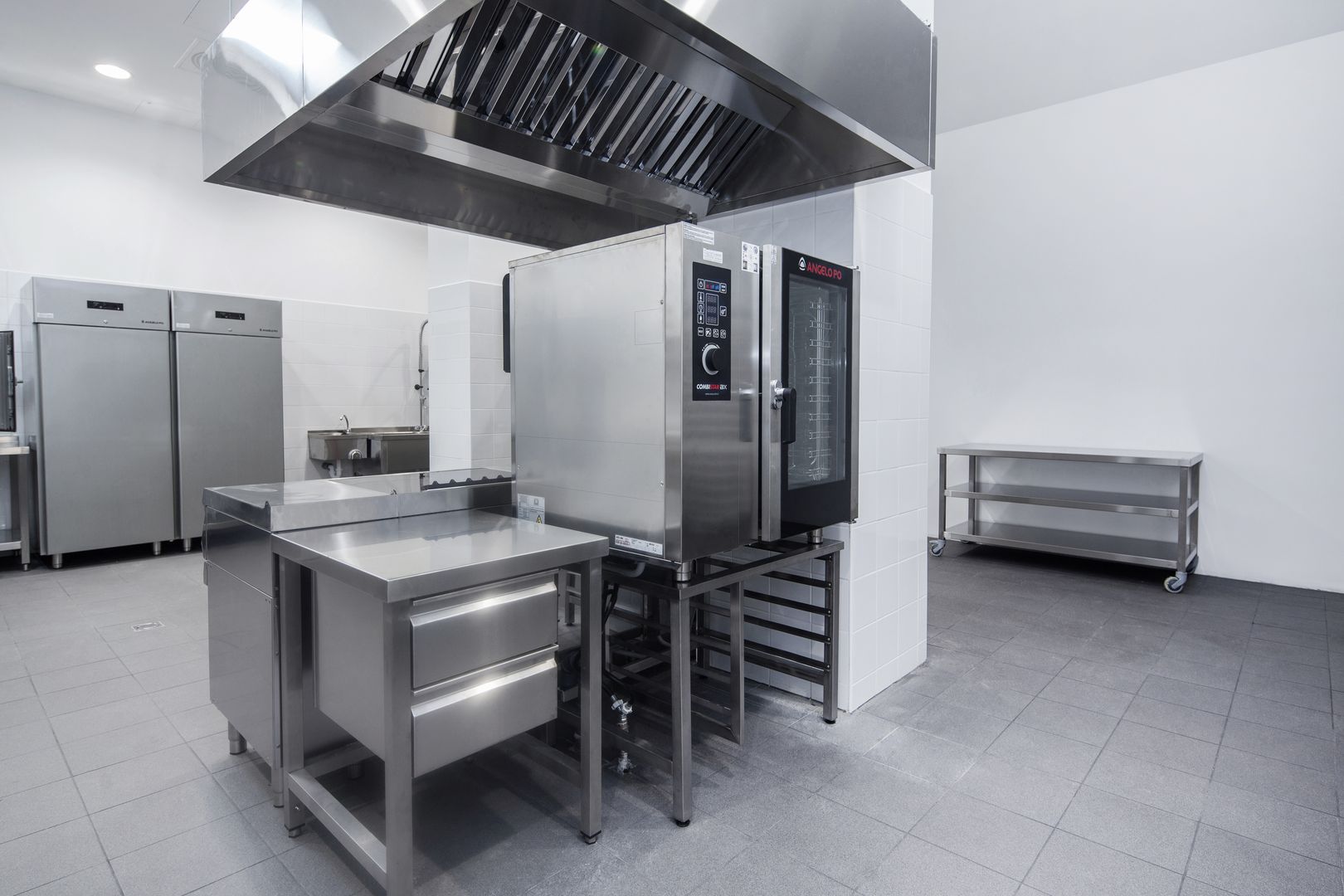
Spacious hallways, double wall guards along traffic routes (at home, we have to fight over even a single corner guard), 2 mm thick edge protectors installed under the tiles (from floor to ceiling, not retrofitted), precise thermal and waterproofing flashings, polished concrete floors, large stainless steel floor drains and grates. Every detail is well-thought-out. In every kitchen, I saw an active ceiling system that facilitates both easier equipment relocation and cleaning.
The cold storage rooms are of very high quality; they are generally recessed into the floor to facilitate cart movement, lined with cold-resistant cladding on the inside, and logically organized: goods arrive, are distributed, and then move directly from the other side of the room into the prep area. At the same time, it was striking that in many places, classic prep areas are now hard to find. In Germany, the supplier infrastructure is much more advanced: a large proportion of the products arrive ready-to-cook, which reduces space requirements and the cleaning workload.
I always admire the stainless-steel doors in the kitchen, which are much wider than those here and all have viewing windows.
Stainless steel appliances and designer consciousness
When touring the kitchen technology spaces, it was striking how much emphasis was placed on stainless steel appliances. They did not settle for standard solutions: there is an abundance of custom-designed and manufactured furniture, where it is evident that thoughtful ergonomics and long-term usability were the primary considerations in the design, while cost played only a secondary role.
This design awareness extends even to the tiniest details. For example, we observed that the stands for combi steamers and appliances are designed so that they physically rest against the wall (they have fixed spacers). This solution ensures that the user cannot accidentally push the unit all the way against the wall, thereby guaranteeing the necessary ventilation and protection of the components.
An interesting technical solution we encountered in the cold rooms was the ceiling access hatches, which facilitate mechanical maintenance. On the logistics side, Mercedes’ characteristic perfectionism is evident: it’s clear that in the past, they spared no expense or resources in building out the high-capacity tray transport systems. Here, everything was designed to ensure that catering for the large number of staff arriving during shift changes and the return of dishes would run as smoothly as possible.
Second canteen – different design, same standard
The second canteen, for 6–7-year-olds, was designed with a completely different interior concept. It is interesting to note that the company does not insist on a uniform design. Polished concrete surfaces dominate here as well, but the serving counter was entirely white.
The offerings are practically identical to the previous one: a vitamin bar at the entrance, a self-service area upstairs, and a quick-service buffet on the ground floor.


Pano café: a specialty coffee experience in an office setting
For several years now, a French operator has been renting space on the ground floor of the CEO’s office building, where the PANO franchise operates. Their menu features high-quality French bread, pastries, and Italian coffee.
The interior design surprised me: I didn’t feel like we were in an office setting at all. It reminded me more of the lobby of a four- or five-star Alpine hotel. Cozy, comfortable, as if we were stepping into our own living room. A faux fireplace, plush armchairs, leather seating, solid oak tables, a mix of chairs, and massive pendant design lamps—a truly premium atmosphere.
Three large specialty Cimbali coffee machines are in operation behind the counter. When we visited in the morning, the space was practically empty, and we even smiled at the capacity. They replied, “Come back between 12 and 2 p.m.” It turned out to be true. In two hours, they prepare about 800–1,000 espressos and milk-based drinks, and if they didn’t have three coffee machines at the register, they’d lose a large portion of their business.
This isn’t my first experience like this with a German company. At the Bosch campus in Budapest, I also saw a specialty coffee concept featuring a La Marzocco machine, complete with a custom blend and a dedicated barista corner. It seems there is a growing demand for a high-quality, paid coffee experience in office building operations, even when free coffee is available in the break rooms.
The coexistence of sport and industry
The Mercedes Quarter in Untertürkheim is located next to two iconic sports facilities: the MHPArena (formerly the Mercedes-Benz Arena), home to VfB Stuttgart, and the Porsche Youth Academy.
Our host told us that a few years ago, the Mercedes Museum was moved to a location outside the factory gates. The futuristic building complex is an architectural masterpiece in its own right.
A visit to the museum is truly a bucket-list experience. The ultra-modern elevators take you up to the eighth floor, from where you can walk through the history in a spiral system—similar to the concept of the Solomon R. Guggenheim Museum—moving downward: from the age of inventors to the most modern Formula 1 developments. It is an extremely well-thought-out, immersive, and spectacular exhibition.


Vaihingen Campus – IT and sales center
After visiting the museum, we drove to the other end of town, to the Mercedes-Benz G4 Campus, where 5,000 to 6,000 people work in IT and sales. Since the introduction of remote work, an average of 4,000 people are on campus daily, about half of whom—2,000–2,500 employees—use the restaurant.
I’ve already written a detailed report on the cafeteria here following a previous visit.
Corporate catering is not a cafeteria
Mercedes’ cafeterias and communal spaces clearly demonstrate that corporate catering today goes far beyond the concept of a “cafeteria.”
Architectural quality, technological awareness, health-conscious offerings, a specialty coffee experience, custom-designed stainless steel furniture, and well-thought-out logistics. All of this together shapes the environment in which thousands of employees spend a significant part of their day.
For me, this has once again confirmed that the future of workplace catering is not only efficient but also experiential.